Kids are naturally curious little beings who love to play, explore, and discover new things around them. 50 Creative Kinetic Sand Sensory Bin Ideas for Toddlers and Kids offer a fun way to turn their natural love for play into meaningful learning experiences.
At their age, learning through theories and long explanations can be difficult because they are still developing their understanding, attention span, and learning abilities.
This is why hands-on activities are a wonderful way to introduce new concepts while helping children grow, learn, and develop important skills.
Through scooping, squeezing, molding, digging, and building, children can explore different textures, express their creativity, practice fine motor skills, and develop their imagination.
These kinetic sand sensory activities also give parents and caregivers an opportunity to nurture children’s curiosity, teach simple concepts, and encourage learning in a way that feels natural and enjoyable.
Whether you’re looking for a simple activity to keep little hands busy at home or creative ways to support your child’s early development, these kinetic sand sensory bin ideas offer plenty of inspiration for meaningful play.
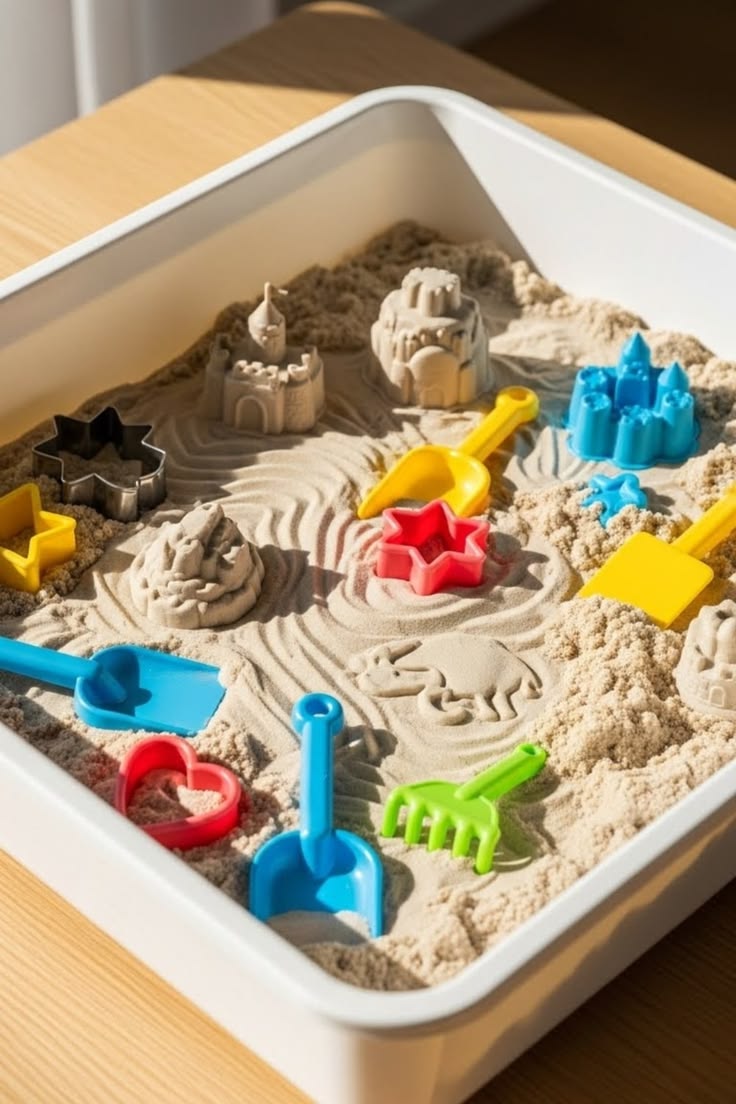
Why Kinetic Sand Sensory Bin Ideas Are Great for Kids
Kinetic sand sensory bin ideas give children opportunities to learn through touching, building, sorting, and exploring.
Instead of relying only on explanations, children can discover new concepts by interacting with materials and seeing what happens when they change something.
These activities can support fine motor practice, hand-eye coordination, creativity, language development, and early mathematical thinking.
For example, when a child fills a cup with sand, empties it, and fills it again, they begin exploring concepts such as full, empty, more, and less.
Sensory play can also encourage imaginative thinking. A simple container of kinetic sand might become a construction site, a bakery, a dinosaur habitat, or a magical garden.
Children can make up stories about what they are creating, which gives them opportunities to practice communication and express their ideas.
To get started, choose a shallow, sturdy bin that is easy for your child to reach.
Add a manageable amount of commercially prepared kinetic sand and introduce only a few accessories at a time.
Too many toys can make the activity confusing, especially for younger children.
Always consider your child’s developmental stage. Kinetic sand is not edible, so supervise play closely and avoid it for children who are likely to put the sand or accessories in their mouths.
DIY Kinetic Sand Sensory Bin Ideas on a Budget
You do not need to purchase a new set of toys for every activity.
Many kinetic sand sensory bin ideas can be created using a few reusable supplies and items you already have at home.
Start with a shallow plastic storage container or sensory tray.
Add commercially prepared kinetic sand, then choose a small number of sturdy accessories that match the activity. Cups, scoops, large toy animals, vehicles, and reusable molds can work across several different themes.
For example, the same animal figures can be used for a farmyard one day and a safari landscape another day.
The same molds can support shape recognition, pretend baking, and castle building.
You can also create simple learning cards with paper and crayons.
Draw letters, numbers, shapes, or colors and place the cards outside the sand tray so they stay clean.
To keep costs down, introduce only one new theme at a time and store the accessories in labeled containers.
Rotating the toys can make familiar materials feel new without requiring additional purchases.
Safe Kinetic Sand Sensory Bin Ideas and Tips for Parents
Safety should always come first when choosing kinetic sand sensory bin ideas, especially for toddlers and children who still put objects in their mouths.
Check the manufacturer’s age recommendations before introducing a kinetic sand product.
Kinetic sand is not edible, and children should not be allowed to taste or swallow it.
If your child frequently mouths toys or sensory materials, choose a more suitable activity recommended for their developmental stage.
Use a shallow, stable container and supervise the activity throughout.
Choose large, sturdy accessories without sharp edges or detachable pieces that could present choking hazards.
Avoid small beads, tiny decorations, loose buttons, and other small objects.
Keep the play area clean and store the sand according to the manufacturer’s instructions.
If it becomes contaminated, follow the product guidance for disposal rather than allowing children to continue playing with it.
It also helps to introduce only a few tools at a time. A simple setup can be easier for children to explore, and it gives you more opportunities to show them how to use each item safely.
Easy Kinetic Sand Sensory Bin Ideas for Toddlers
Simple activities are a great starting point when introducing children to sensory play. You do not need an elaborate theme or expensive accessories.
A few sturdy containers and basic tools are enough to encourage exploration.
1. Scoop and Fill
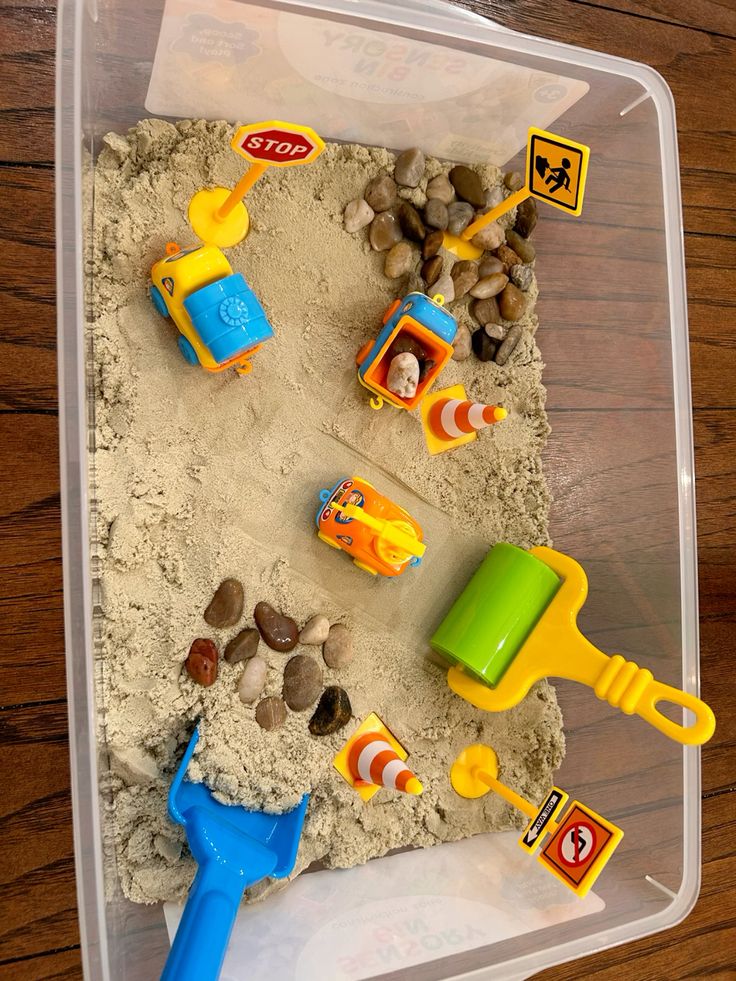
What you need: Kinetic sand, a shallow sensory bin, sturdy scoops, and several unbreakable cups or bowls.
How to set it up: Place the sensory bin on a stable, easy-to-clean surface. Pour a manageable amount of kinetic sand into the bin, then arrange the cups and scoops beside it. Start by demonstrating how to scoop sand into a cup and tip it back into the bin.
Invite your child to try filling each container. You can ask simple questions such as, “Can you fill this cup?” or “Which bowl has more sand?” Let your child empty the containers and repeat the activity as often as they like.
What children learn: Scooping and transferring sand provide opportunities to practice hand-eye coordination, controlled hand movements, and early concepts such as full, empty, and quantity.
2. Sandcastle Building
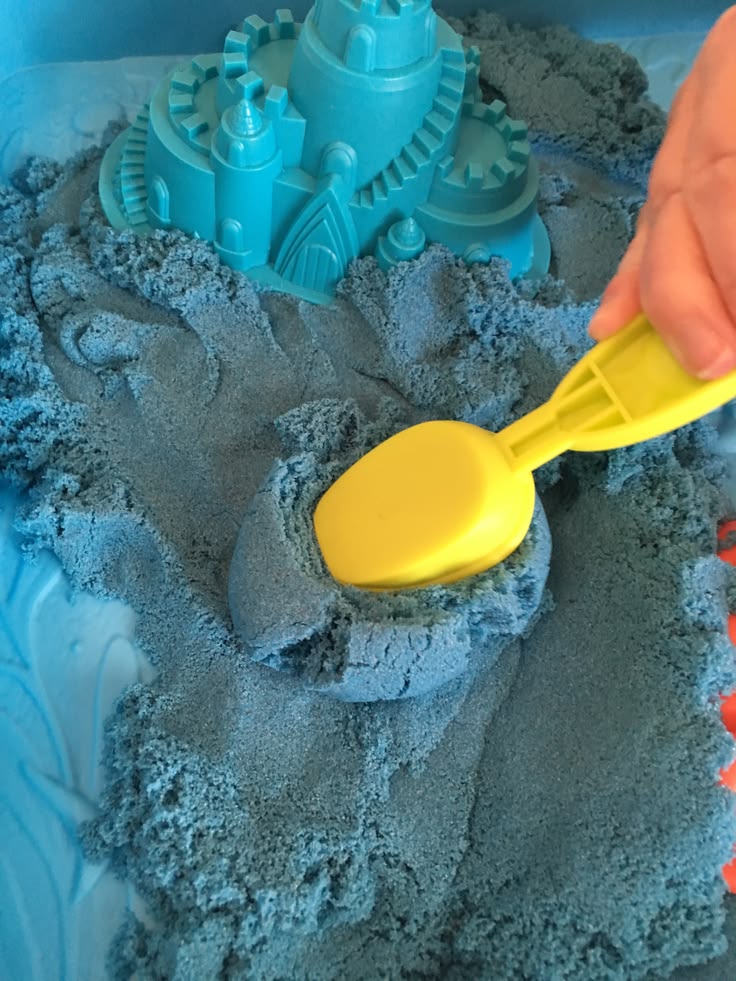
What you need: Kinetic sand, large sandcastle molds, a sturdy tray, and a child-safe plastic scoop.
How to set it up: Place the molds inside the bin and show your child how to fill one with sand. Encourage them to press the sand gently into the mold before turning it over onto the tray.
Lift the mold carefully to reveal the shape. If the castle collapses, demonstrate how to refill the mold and try again. Older preschoolers can experiment with building several towers and connecting them with walls.
What children learn: This activity encourages creativity, persistence, and spatial awareness. Children can also compare tall and short towers or discuss why some structures hold their shapes better than others.
3.Press and Release Shapes
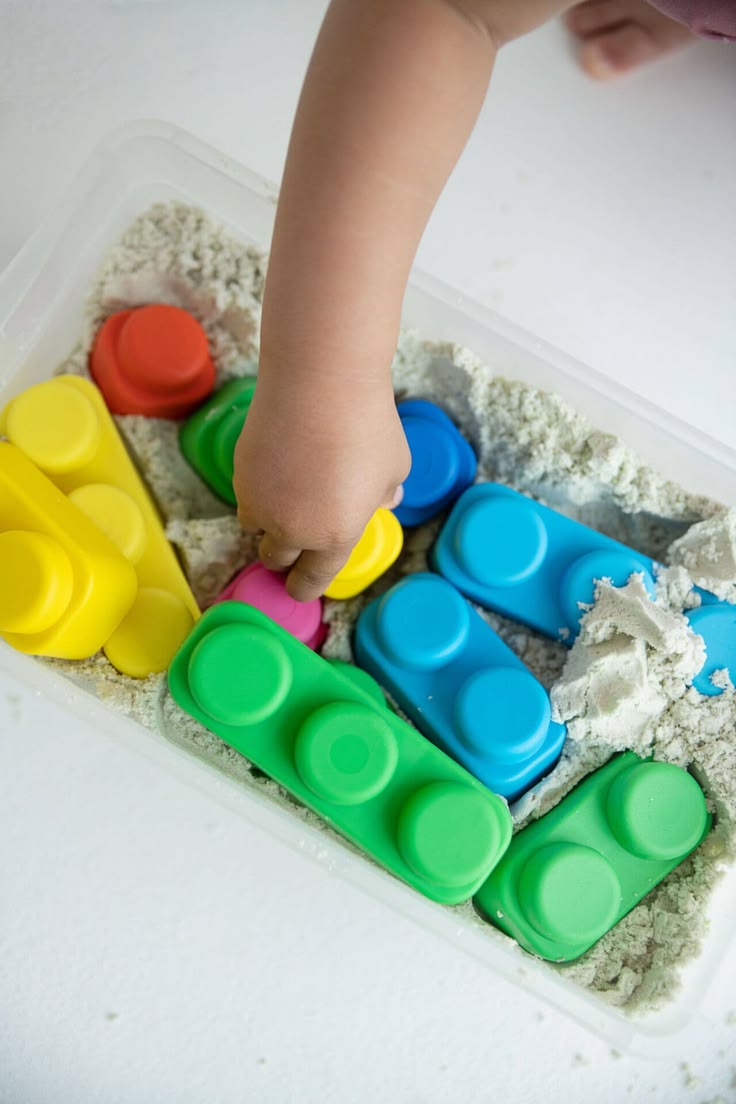
What you need: Kinetic sand, large child-safe shape molds, and a shallow bin.
How to set it up: Spread the sand into a relatively flat layer. Give your child one large shape mold at a time and demonstrate how to press it into the sand. Show them how to lift the mold slowly to reveal the shape.
Start with familiar shapes, such as circles and squares. Name each shape as your child makes it, then encourage them to create another one. You can also ask them to find two matching shapes.
What children learn: Children get to practice hand movements while becoming familiar with basic shapes, matching, and visual recognition.
4. Sand Mountain
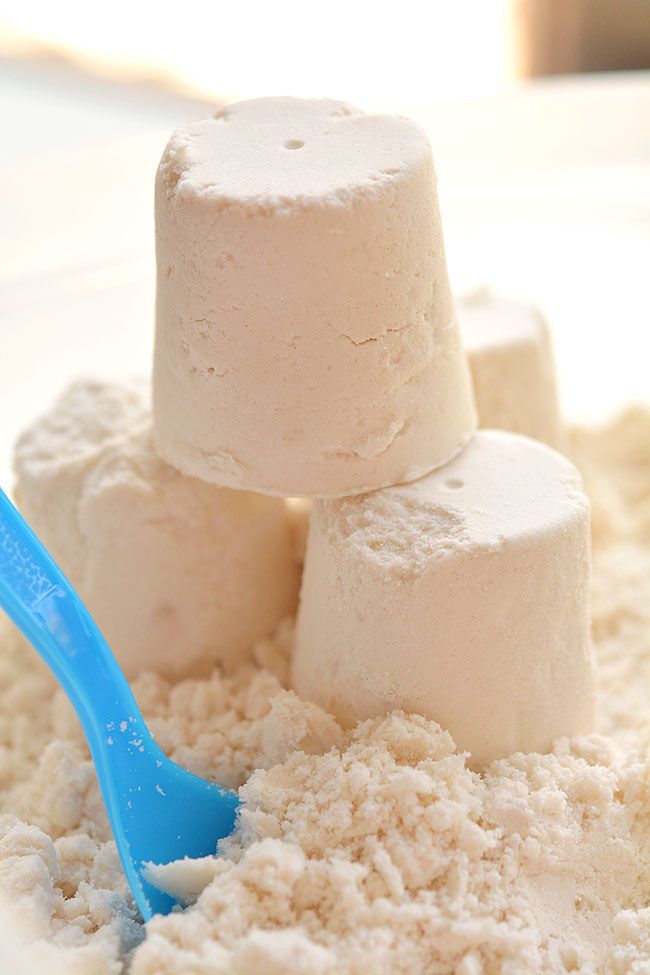
What you need: Kinetic sand, a shallow bin, and a sturdy scoop or small plastic shovel.
How to set it up: Help your child gather the sand into one central pile. Show them how to add more sand to make the mountain taller and press the sides gently to change its shape.
Invite them to make a second mountain beside the first one. Ask which mountain looks taller, which one is wider, and what happens when they flatten the top.
What children learn: This simple activity introduces size comparisons and basic cause-and-effect exploration. It also encourages children to experiment with building and reshaping.
Creative Kinetic Sand Sensory Bin Ideas for Preschoolers
Preschoolers often enjoy activities that give them a little more freedom to imagine, experiment, and solve problems.
These kinetic sand sensory bin ideas combine hands-on play with opportunities to create stories and make decisions.
5. Mini Town
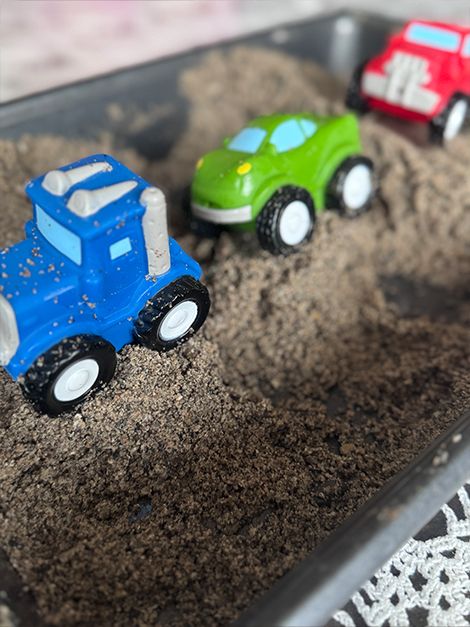
What you need: Kinetic sand, a shallow tray, large toy houses or sturdy blocks, and toy vehicles suitable for your child’s age.
How to set it up: Spread the sand across the bottom of the tray. Use your hands or a child-safe tool to create several flat areas for buildings and winding paths for vehicles.
Let your child position the houses and blocks around the paths. They can make a school, a shop, a park, or any other place they know.
Encourage them to move vehicles between locations and explain where each one is going.
What children learn: Mini-town play encourages imaginative storytelling, spatial awareness, and language development. You can also introduce simple concepts such as near, far, beside, and between.
6. Animal Homes
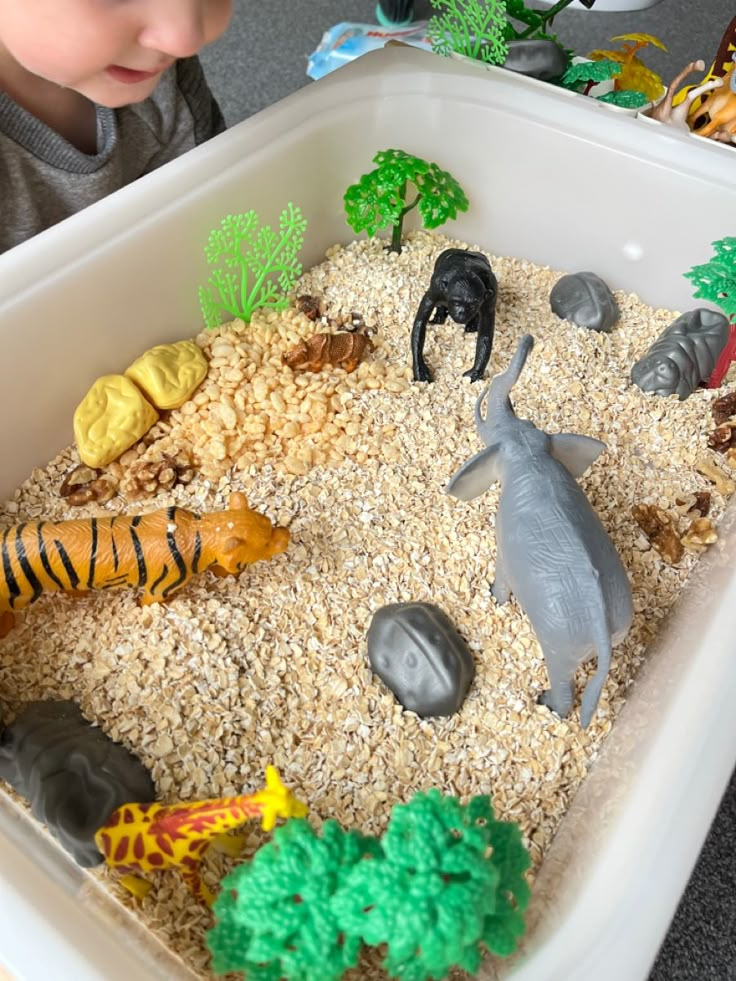
What you need: Kinetic sand, large toy animal figures, and a few sturdy habitat accessories.
How to set it up: Choose two or three animals and ask your child where they might live.
Help them create a sandy area for each animal. For example, they might build a landscape for a camel or create a pretend farmyard for a cow.
Invite your child to move the animals into their homes and tell a story about what they do during the day.
What children learn: This activity introduces animals and habitats while encouraging storytelling and curiosity about the natural world.
7. Pretend Bakery
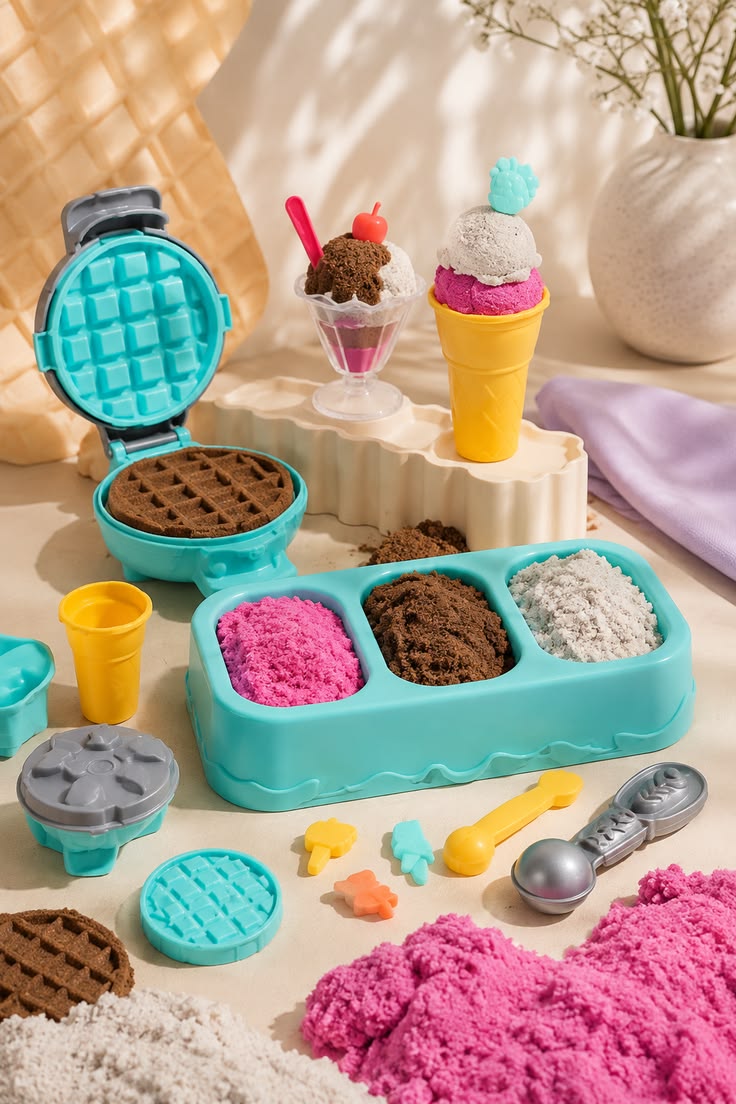
What you need: Kinetic sand, large cookie cutters, a child-safe rolling tool, and sturdy pretend baking trays.
How to set it up: Place a portion of sand on the tray and show your child how to flatten it with the rolling tool.
Demonstrate how to press a cookie cutter into the flattened sand and lift it to reveal the shape.
Arrange the pretend cookies on the baking tray. Your child can make different shapes, pretend to take customer orders, and invent a name for the bakery.
Make it clear that the sand creations are pretend food and must never be eaten.
What children learn: Pretend bakery play supports creativity, communication, shape recognition, and simple social skills.
Bookmark These For Later
DIY Activities for Kids: 30 Fun, Easy, and Screen-Free
DIY Fimo for Everyone: 45 Ideas
Things to Make with Air Dry Clay for beginners
fall crafts for kindergarten for home and classroom
Elf on the Shelf Ideas 2026: 50 Creative & Easy Setups
8. Shape Challenge
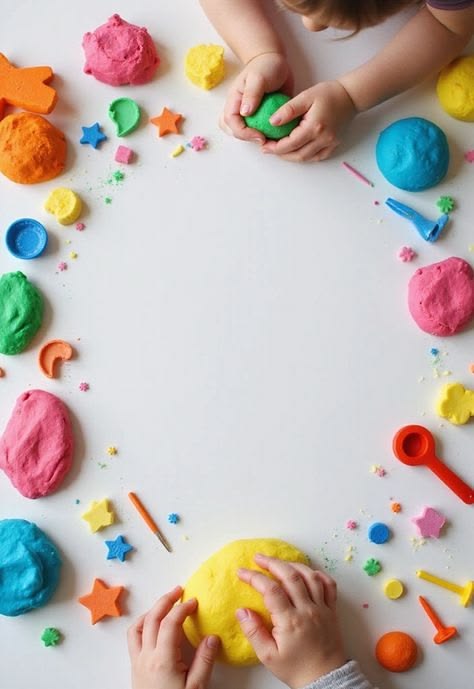
What you need: Kinetic sand, large shape molds, and picture cards showing familiar shapes.
How to set it up: Place the picture cards outside the bin and keep the molds beside the sand. Choose one card and ask your child to find the matching mold.
Show them how to fill the mold with sand, press gently, and lift it carefully. Continue with other shapes, allowing your child to select some independently.
For older preschoolers, invite them to find objects around the room that resemble the shapes they have made.
What children learn: The activity encourages visual matching, shape recognition, attention, and problem-solving.
Dinosaur and Construction Kinetic Sand Sensory Bin Ideas
Dinosaur and construction themes are especially appealing to children who love digging, building, and discovering hidden objects. They also provide opportunities to introduce new words and encourage imaginative adventures.
9. Dinosaur Fossil Dig
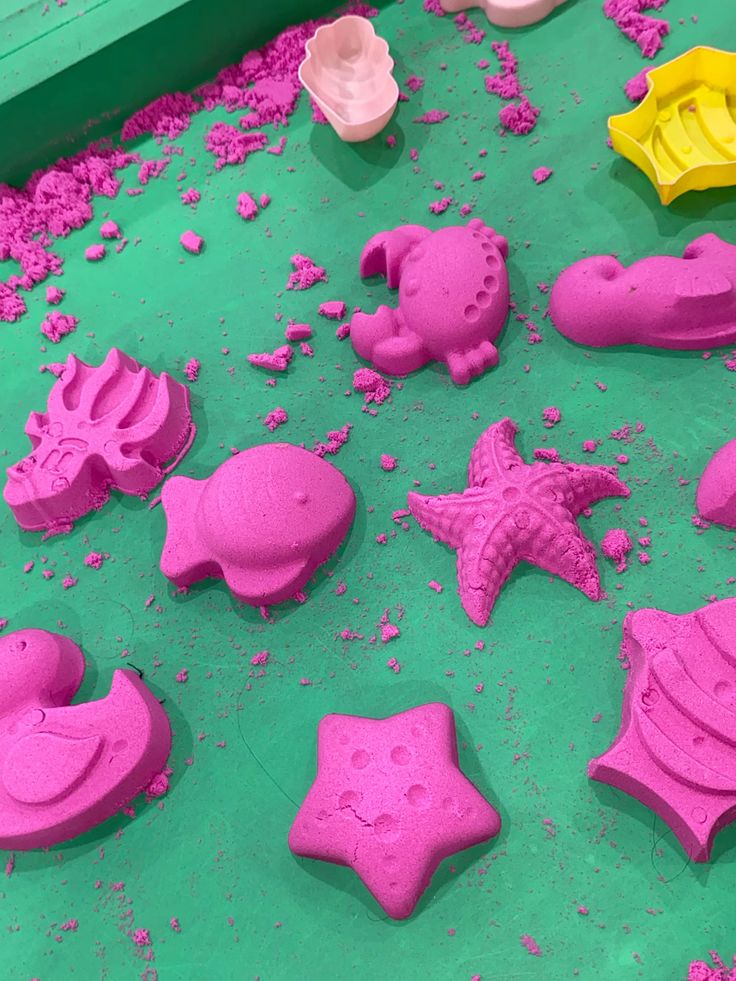
What you need: Kinetic sand, large solid dinosaur or fossil toys, a shallow bin, sturdy scoops, and a soft brush.
How to set it up: Place the dinosaur figures or oversized fossil toys in the bin and partially cover them with sand. Keep some objects visible so younger children can understand what they are searching for.
Give your child a scoop and demonstrate how to move the sand gently rather than digging forcefully. Once an object appears, use the brush to remove the remaining sand. Let your child collect the discoveries in a separate container.
You can ask questions such as, “What did you find?” and “Can you find another dinosaur?”
What children learn: This activity encourages careful movements, observation, vocabulary development, and imaginative scientific exploration.
10.Dinosaur Habitat
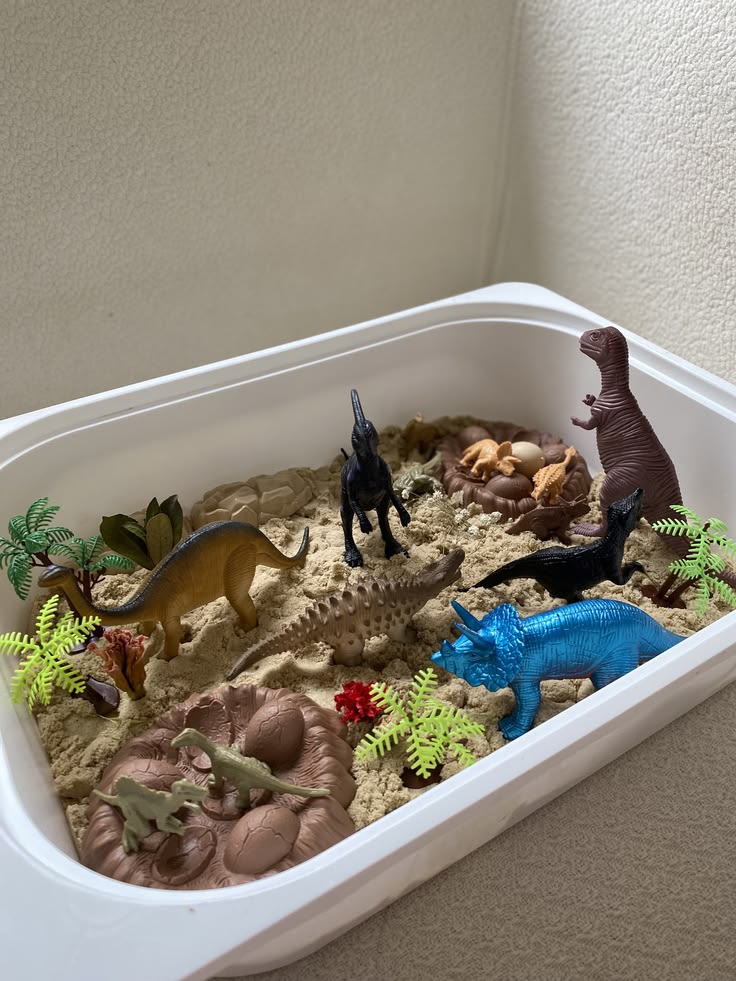
What you need: Kinetic sand, large dinosaur figures, and a few sturdy pretend trees or rocks.
How to set it up: Spread the sand across the bin and shape a few hills. Arrange the trees and rocks around the landscape, leaving enough space for the dinosaur figures to move.
Invite your child to decide where the dinosaurs will live, where they will walk, and where they might find food. They can create footprints by gently pressing suitable toy feet into the sand.
What children learn: Children practice storytelling and spatial planning while exploring the idea that animals live in different environments.
11. Construction Site
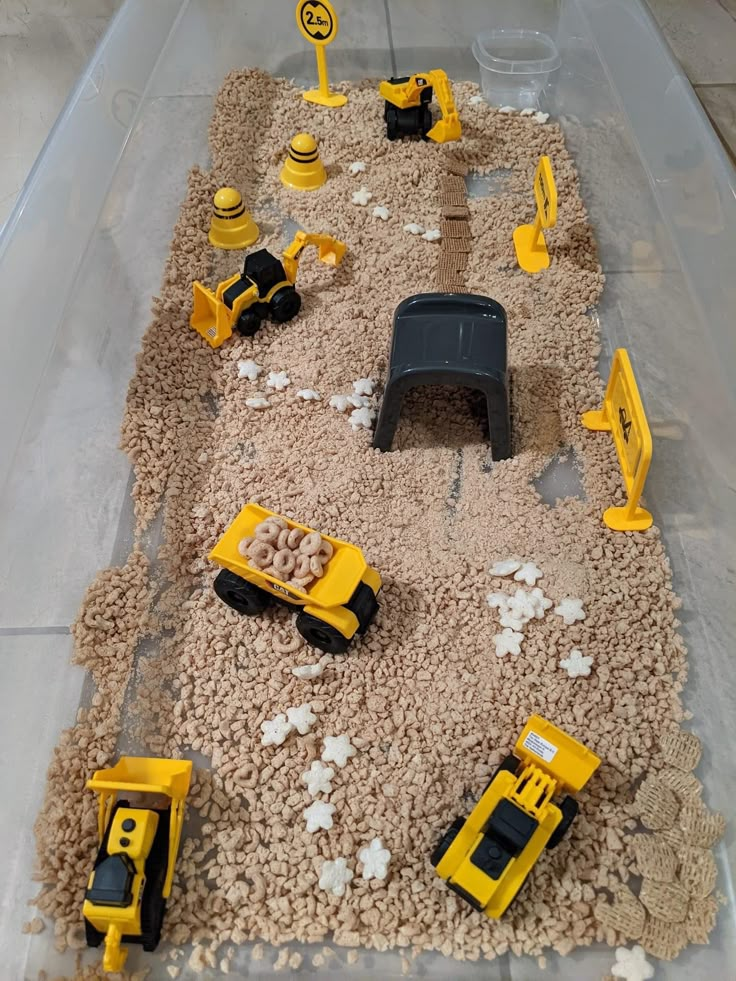
What you need: Kinetic sand, toy dump trucks, toy excavators, and a shallow construction-themed bin.
How to set it up: Place the sand in one side of the bin and leave the other side available for a pretend work area. Show your child how to scoop sand into a dump truck, move it across the bin, and empty it into another area.
Let them make a small hill, dig a shallow trench, or flatten a section for a pretend building. Introduce simple roles, such as the excavator digging and the dump truck transporting materials.
What children learn: Construction play encourages coordination, imaginative problem-solving, and understanding of simple sequences.
12. Road Builder
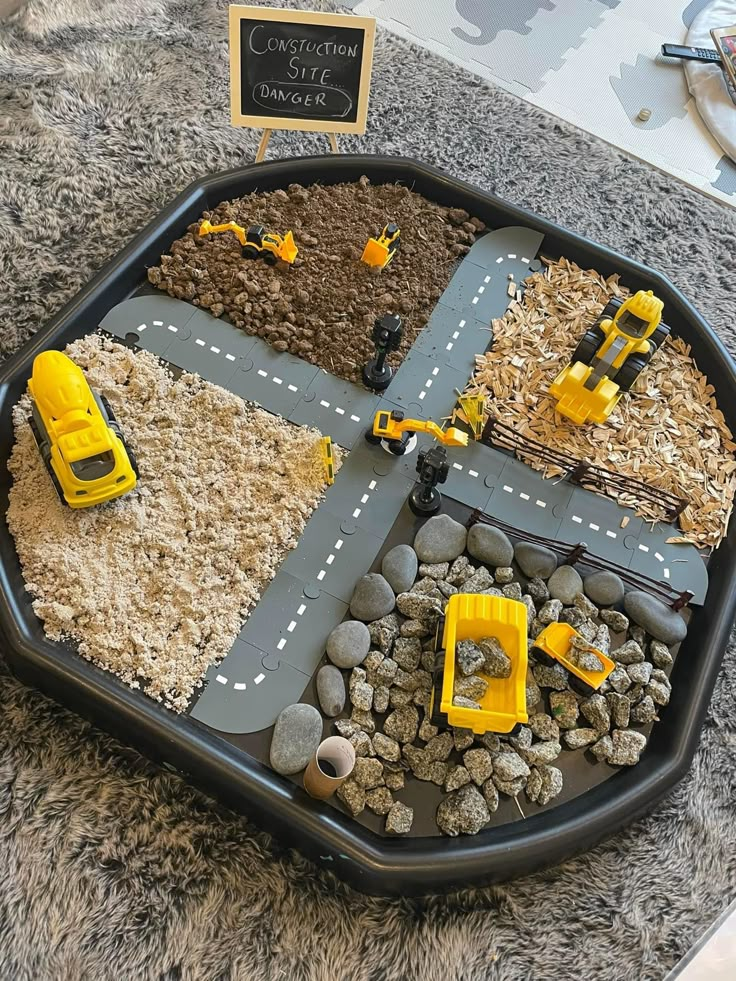
What you need: Kinetic sand, toy vehicles, a child-safe roller, and large road-building accessories if available.
How to set it up: Spread the sand evenly and use the roller or the flat side of a suitable tool to create a smooth road. Make a few bends and intersections with your child.
Let them drive the vehicles along the route. They can build a bridge from sturdy blocks placed outside or alongside the sand area and decide where the road should lead.
What children learn: This activity supports spatial awareness, planning, and language as children describe routes and directions.
Ocean and Beach Kinetic Sand Sensory Bin Ideas
Ocean-themed kinetic sand sensory bin ideas allow children to explore a pretend seaside world without needing to mix water into the sand. A separate blue tray or blue paper placed beside the bin can represent the ocean.
13. Mini Beach
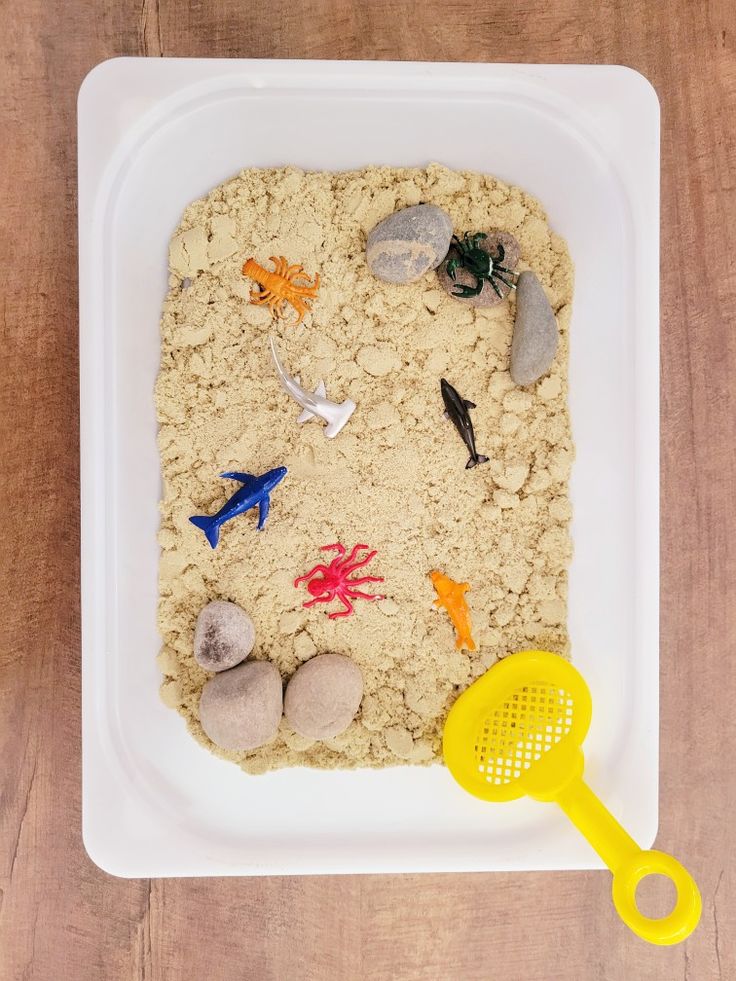
What you need: Kinetic sand, large sandcastle molds, sturdy toy beach accessories, and a shallow tray.
How to set it up: Spread the sand across the tray and create a beach area. Add a few castle molds and large pretend beach accessories, such as a sturdy bucket or toy beach chair.
Show your child how to make a sandcastle, then invite them to design their own beach. They can pretend to build a seaside resort, prepare a beach picnic, or take toy figures on vacation.
What children learn: The activity encourages imagination, descriptive language, and creative building.
14. Underwater Treasure Hunt
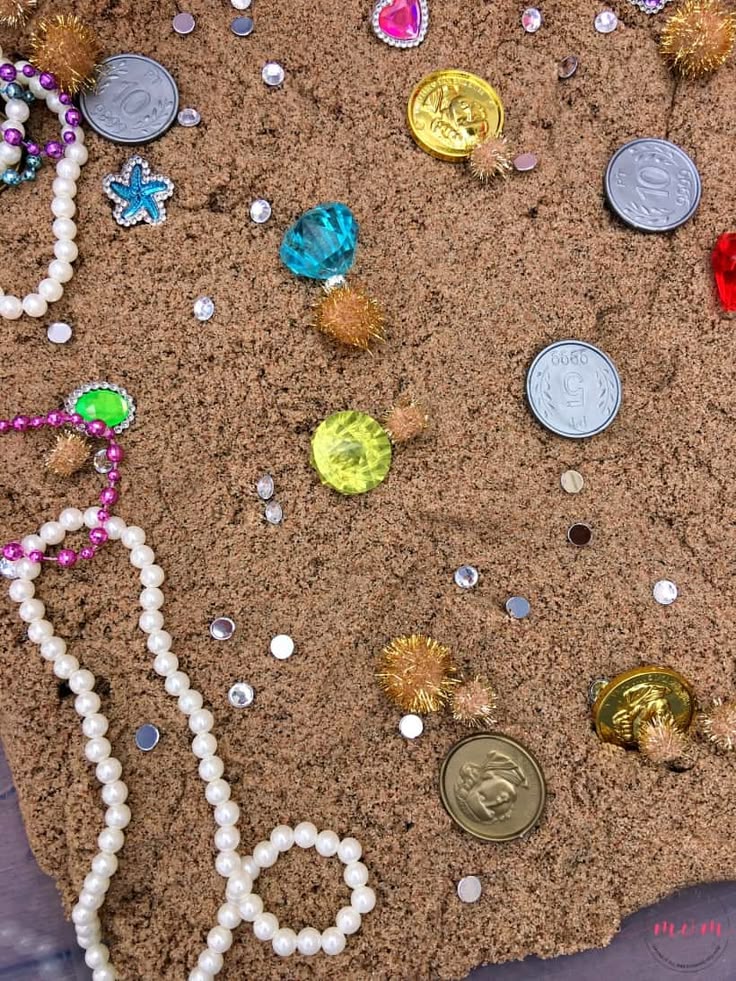
What you need: Kinetic sand, large solid treasure tokens or sea-creature figures, a scoop, and a collection bowl.
How to set it up: Hide a few large, safe objects beneath the sand, leaving enough space between them for easy discovery. Tell your child that a treasure is hidden in the underwater world.
Demonstrate how to move the sand carefully with a scoop. Each time your child finds an object, ask them to identify it and place it in the collection bowl.
For older children, use simple picture clues to suggest what they should look for next.
What children learn: Treasure hunts encourage observation, attention, vocabulary, and simple problem-solving.
15. Sea Turtle Habitat
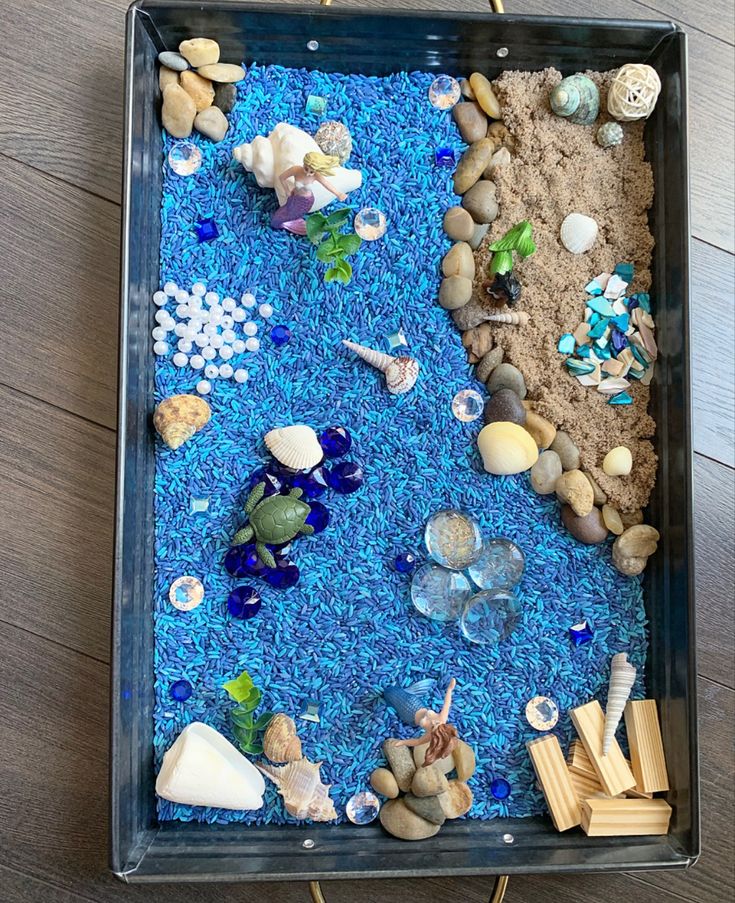
What you need: Kinetic sand, large toy sea turtles, and a shallow sensory bin.
How to set it up: Shape the sand into a beach with a few gentle slopes. Place the turtle figures on the sand and explain that real sea turtles come ashore to lay their eggs.
Invite your child to make a pretend nesting area and guide the turtles across the beach. Use the opportunity to discuss why keeping beaches clean helps protect wildlife.
What children learn: This activity combines imaginative play with an introduction to animal habitats and environmental awareness.
16. Ocean Animal Rescue
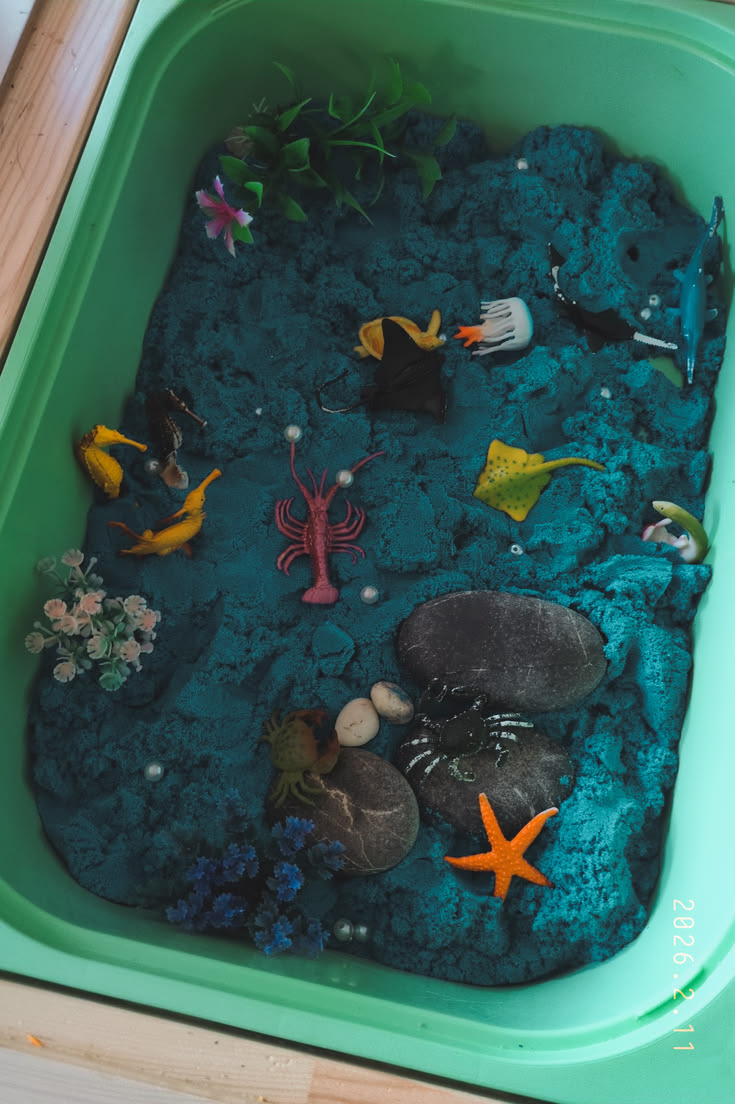
What you need: Kinetic sand, large sea-creature figures, a scoop, and a separate rescue tray.
How to set it up: Partially bury several sea-creature figures in the sand. Explain that the animals need help reaching a safe area.
Show your child how to uncover each figure carefully and transfer it to the rescue tray. Once all the animals are safe, invite them to arrange the creatures and tell you what happened during the rescue.
What children learn: Children practice gentle hand movements, storytelling, and caring themes through pretend play.
Farm and Safari Animal Kinetic Sand Sensory Bin Ideas
Animal-themed activities are useful for introducing children to the natural world. They can learn about familiar animals while creating habitats and inventing stories.
17. Farmyard Adventure
What you need: Kinetic sand, large farm animal figures, a toy tractor, and a shallow tray.
How to set it up: Spread the sand into a flat layer and use a scoop to create a few paths. Arrange the animal figures in different areas of the bin.
Show your child how the tractor can travel along the paths and how the animals can move between their pretend homes. Invite them to name each animal and make its sound.
For an extra learning opportunity, ask what each animal might eat or where it might sleep.
What children learn: Farmyard play introduces animal names, sounds, habitats, and simple storytelling.
18. Safari Landscape
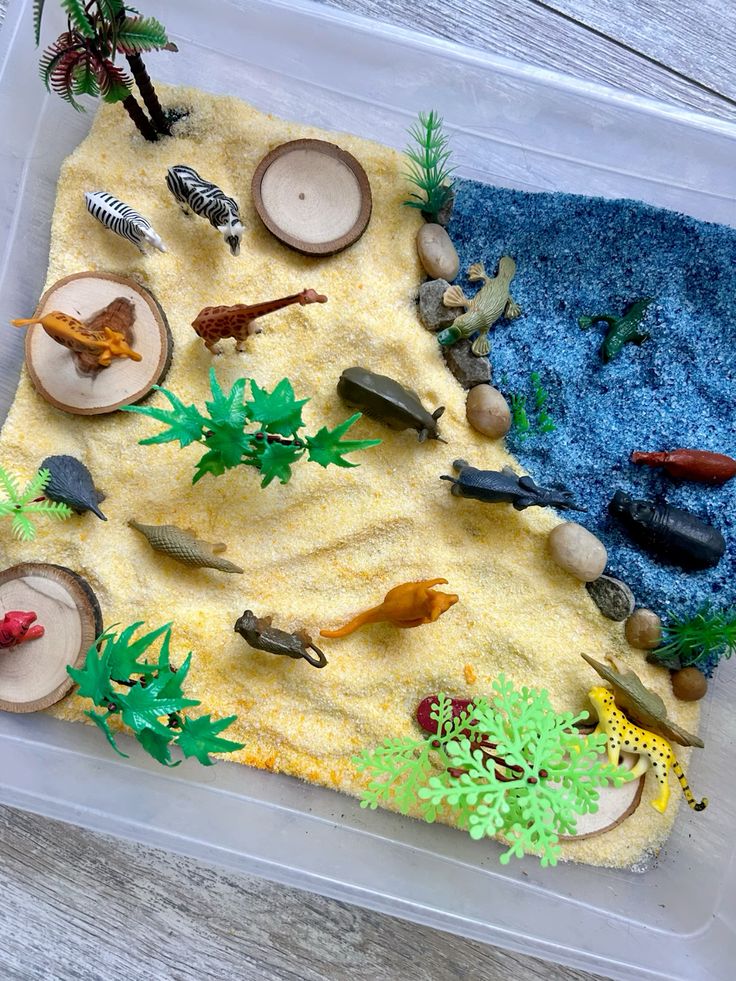
What you need: Kinetic sand, large toy safari animals, and a few sturdy trees or rocks.
How to set it up: Shape the sand into hills and open areas. Place the trees and rocks around the edges to create a pretend wildlife landscape.
Let your child arrange the elephants, giraffes, lions, and other animals. Encourage them to move the figures around and imagine how the animals explore their environment.
You can introduce simple facts about where these animals live and what they eat.
What children learn: The activity supports vocabulary, imaginative play, and early awareness of animal habitats.
19. Animal Rescue
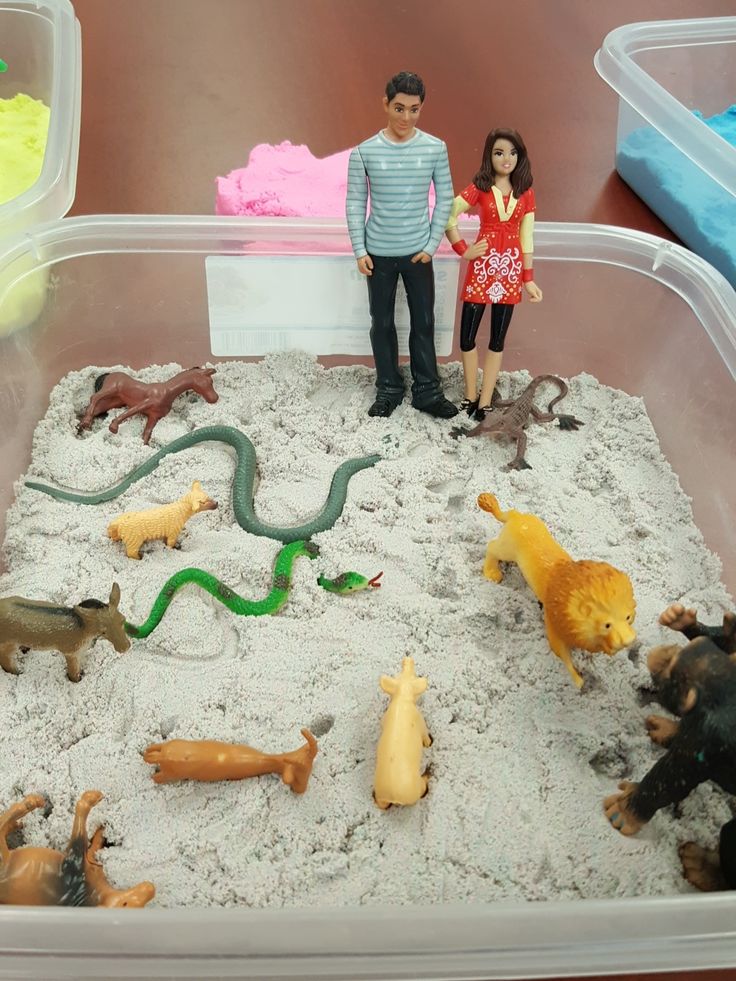
What you need: Kinetic sand, large solid animal figures, a scoop, and a separate tray.
How to set it up: Partially cover a few animals with sand and explain that they need help getting out. Demonstrate how to uncover an animal without pressing too hard.
After each rescue, invite your child to place the animal in the safe area. They can decide which animal should be rescued next and make up a story about why it needs help.
What children learn: Children practice coordination, sequencing, and creative storytelling.
20. Animal Footprints
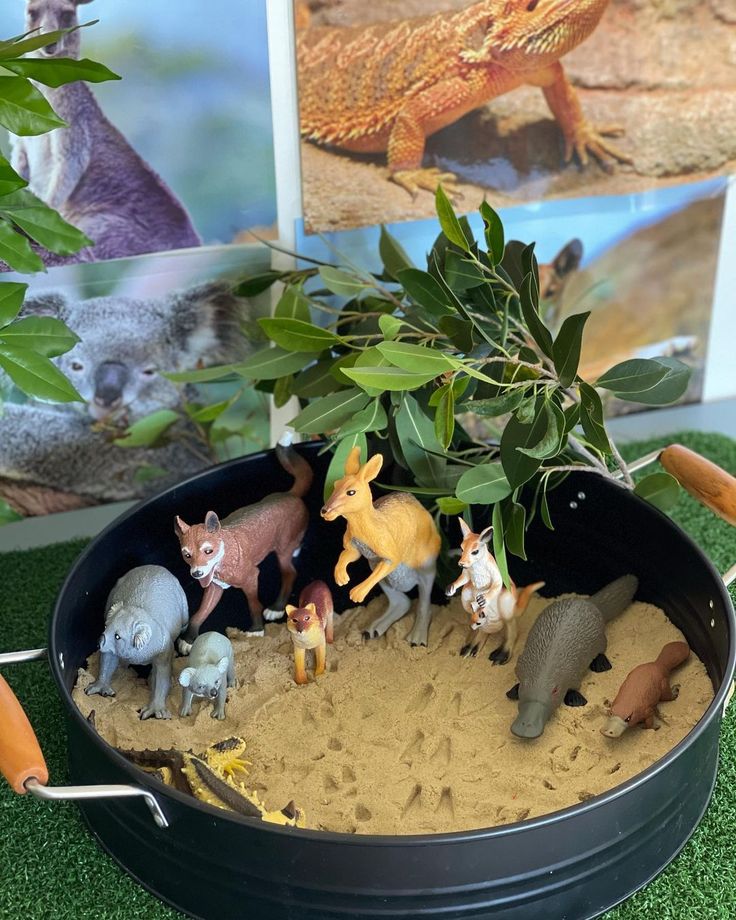
What you need: Kinetic sand and large, sturdy animal figures with suitable textured feet.
How to set it up: Flatten the sand into a smooth surface. Show your child how to press an animal figure gently into the sand to make a footprint.
Lift the figure and examine the mark together. Try another animal and compare the prints. Ask which footprint looks larger or whether the marks appear similar.
What children learn: This activity encourages observation, comparison, and curiosity about patterns and shapes.
Food-Themed Kinetic Sand Sensory Bin Ideas
Food-themed activities let children pretend to cook, bake, and serve meals. They are particularly enjoyable for children who like helping in the kitchen or playing restaurant.
21. Kinetic Sand Bakery
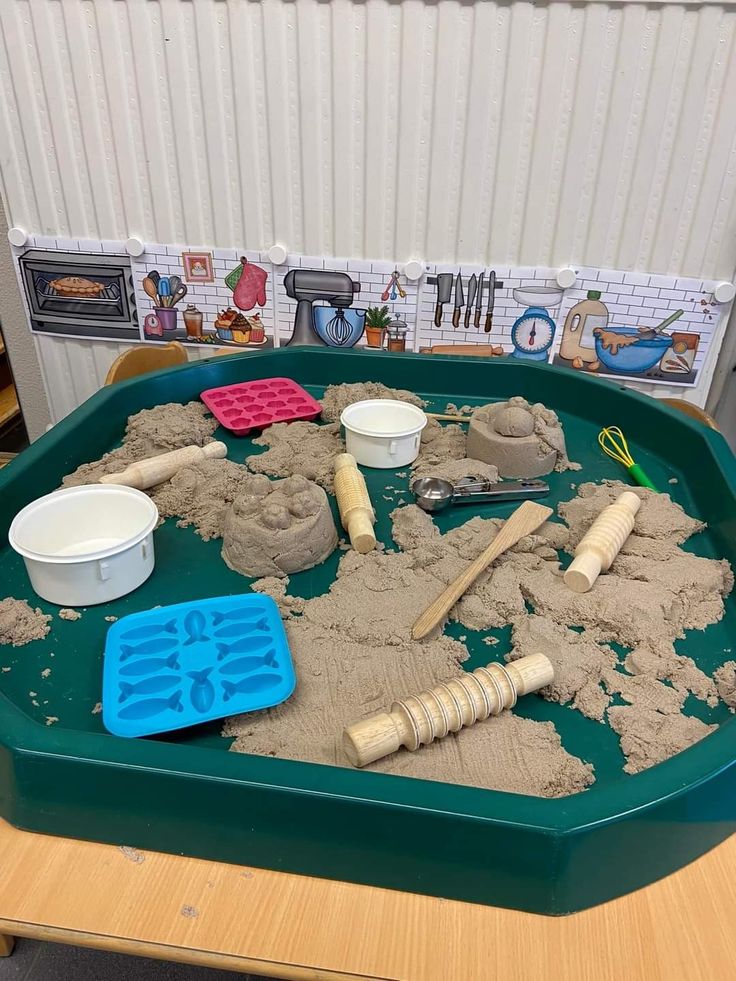
What you need: Kinetic sand, a child-safe rolling tool, large cookie cutters, and sturdy pretend baking trays.
How to set it up: Flatten the sand with the rolling tool and demonstrate how to cut out pretend cookies. Place the shapes on the tray and invite your child to make more.
You can introduce different bakery products, such as pretend bread, cupcakes, and biscuits. Help your child create a simple paper menu and give the bakery a name.
What children learn: Bakery play encourages creativity, communication, shape recognition, and imaginative social interaction.
22. Pizza Shop
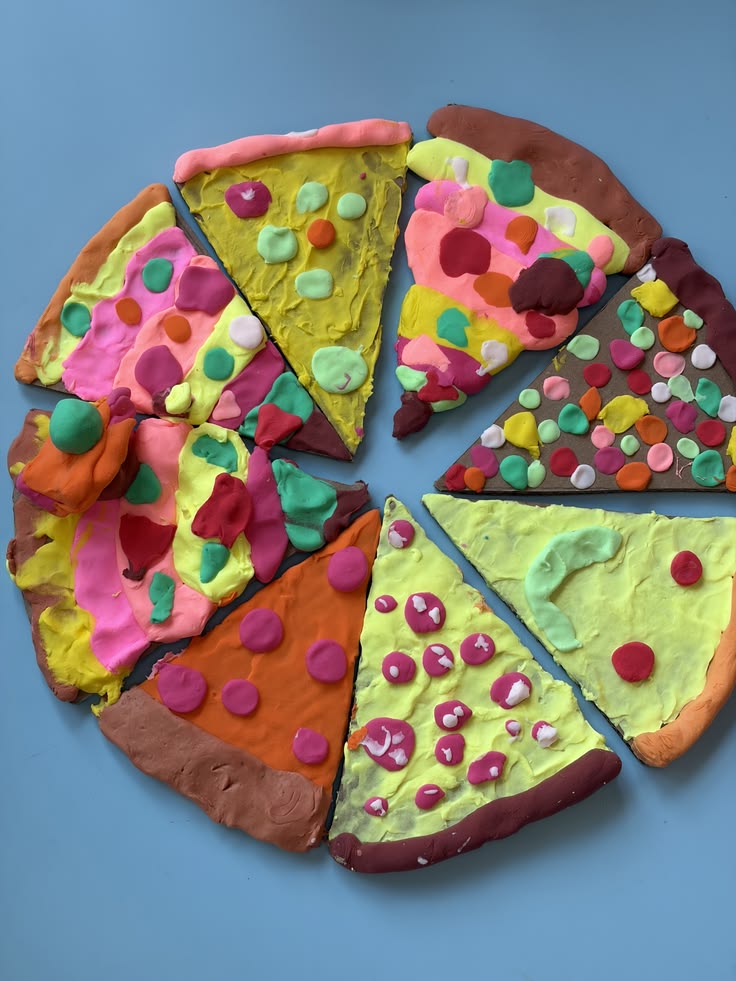
What you need: Kinetic sand, a flat tray, a rolling tool, and large, solid pretend toppings.
How to set it up: Help your child flatten a portion of sand into a round pizza base. Arrange the pretend toppings beside the bin and demonstrate how to place them on the pizza.
Invite your child to create different combinations. They can pretend to take orders, prepare the pizzas, and deliver them to imaginary customers.
What children learn: The activity supports imaginative thinking, sorting, counting, and conversational skills.
23. Ice Cream Stand
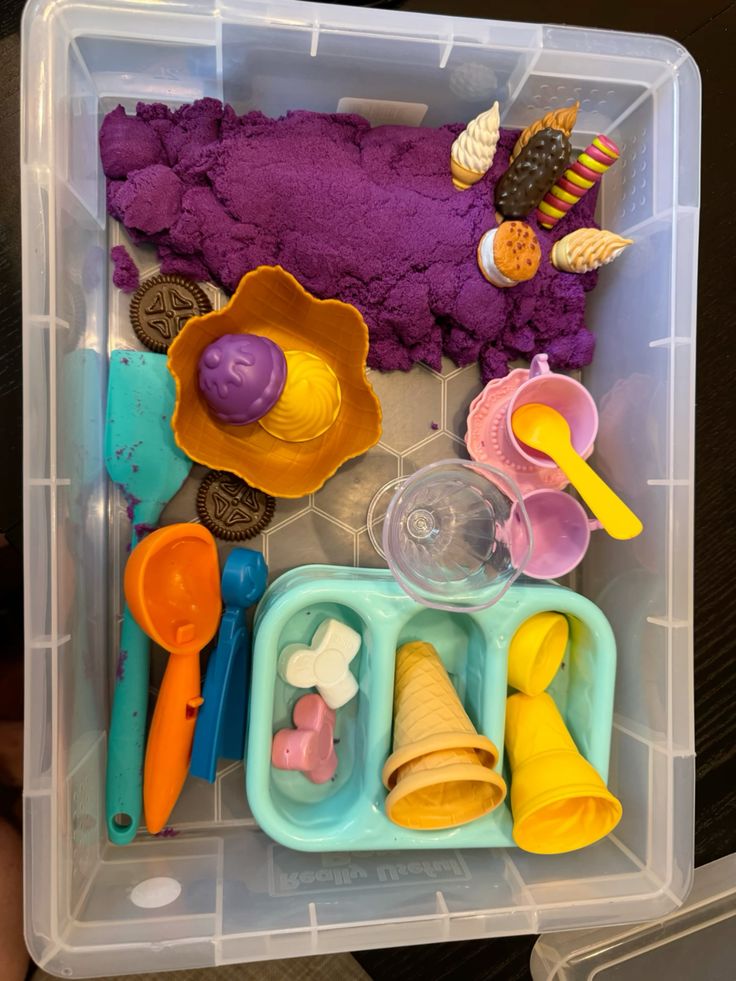
What you need: Kinetic sand, sturdy toy cones or cups, large scoops, and a shallow tray.
How to set it up: Place the sand in the tray and demonstrate how to scoop it into a cone or cup. Show your child how to press the sand gently into a rounded shape.
Invite them to create a pretend ice cream shop with different flavors represented by colored sand, if available. They can take turns being the shopkeeper and customer.
What children learn: Children practice hand-eye coordination, color recognition, counting, and social interaction.
24. Pretend Restaurant
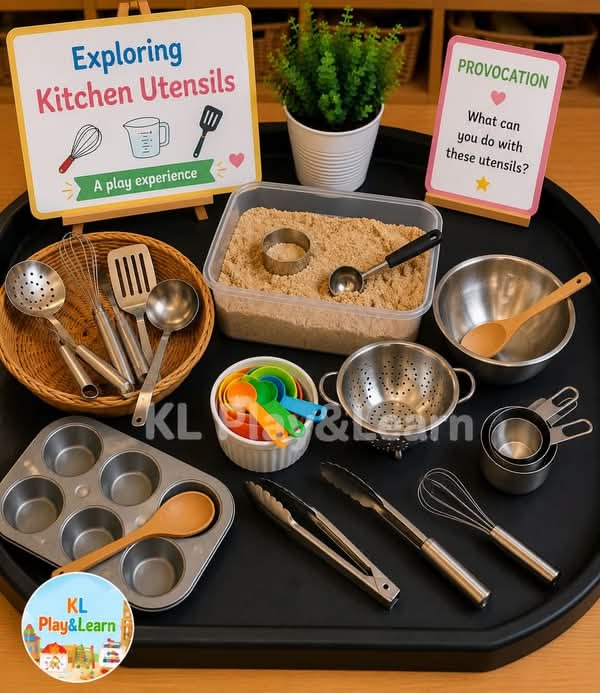
What you need: Kinetic sand, large molds, sturdy plates or trays, and paper and crayons for a pretend menu.
How to set it up: Arrange the sand and molds in a pretend kitchen area. Help your child create several pretend dishes and place them on the trays.
Next, make a simple menu using drawings of the dishes. Encourage your child to take your order, prepare the pretend meal, and serve it. Switch roles so your child can be the customer.
What children learn: Restaurant play encourages language development, imagination, sequencing, and turn-taking.
Garden and Nature Kinetic Sand Sensory Bin Ideas
Nature-inspired activities can introduce children to gardens, plants, and insects through pretend play.
Use sturdy accessories rather than real seeds, small stones, or other objects that may present choking hazards.
25. Mini Garden
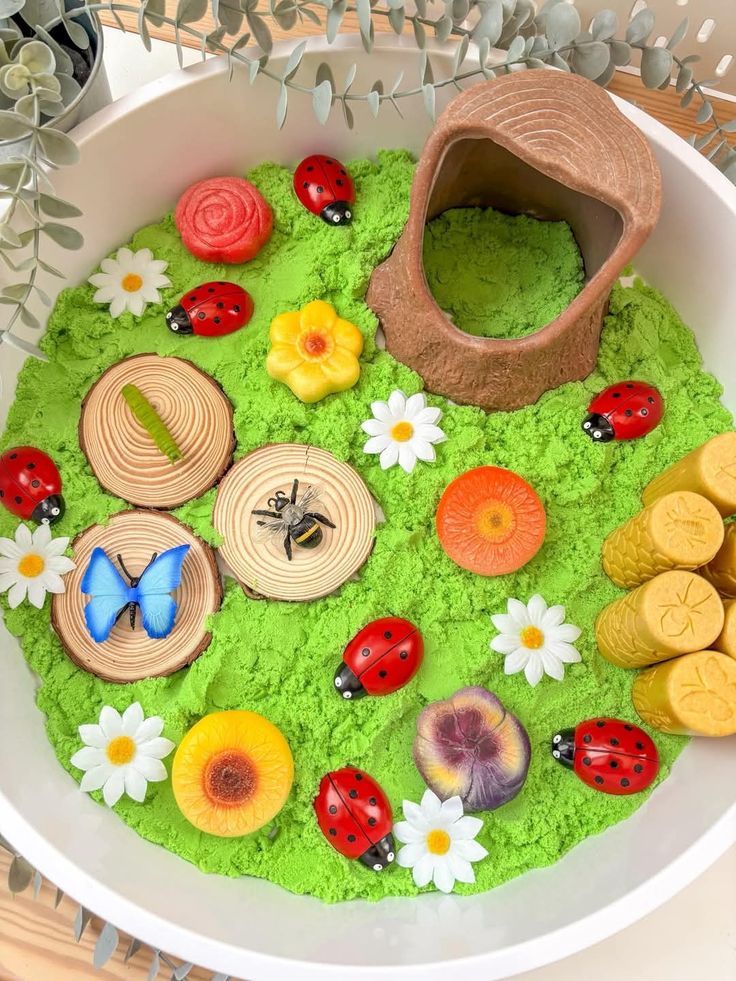
What you need: Kinetic sand, a shallow bin, large toy flowers, and child-safe gardening tools.
How to set it up: Spread the sand across the bin and divide it into several pretend garden beds. Show your child how to make shallow rows using a suitable tool.
Arrange the toy flowers in the rows and let your child design the garden.
They can create different sections, choose where each flower belongs, and pretend to water the plants using an imaginary watering can.
What children learn: This activity encourages creativity, sorting, and early awareness of how gardens are arranged.
26. Vegetable Patch
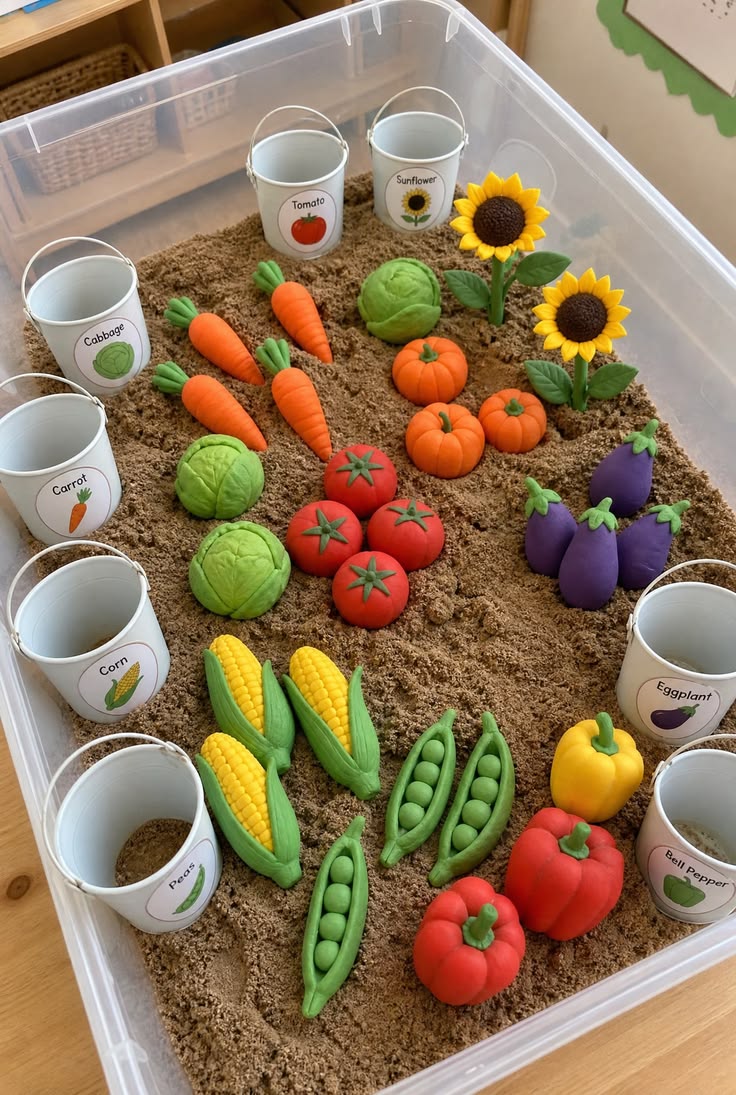
What you need: Kinetic sand, large toy vegetables, a scoop, and a shallow tray.
How to set it up: Create several rows in the sand and explain that each row represents a place where vegetables grow. Arrange the toy vegetables beside the bin.
Invite your child to place each vegetable in a row and pretend to harvest it. They can sort the vegetables by color or type and name each one.
What children learn: Children practice categorization, vocabulary, and basic awareness of vegetables and gardening.
27. Bug Habitat
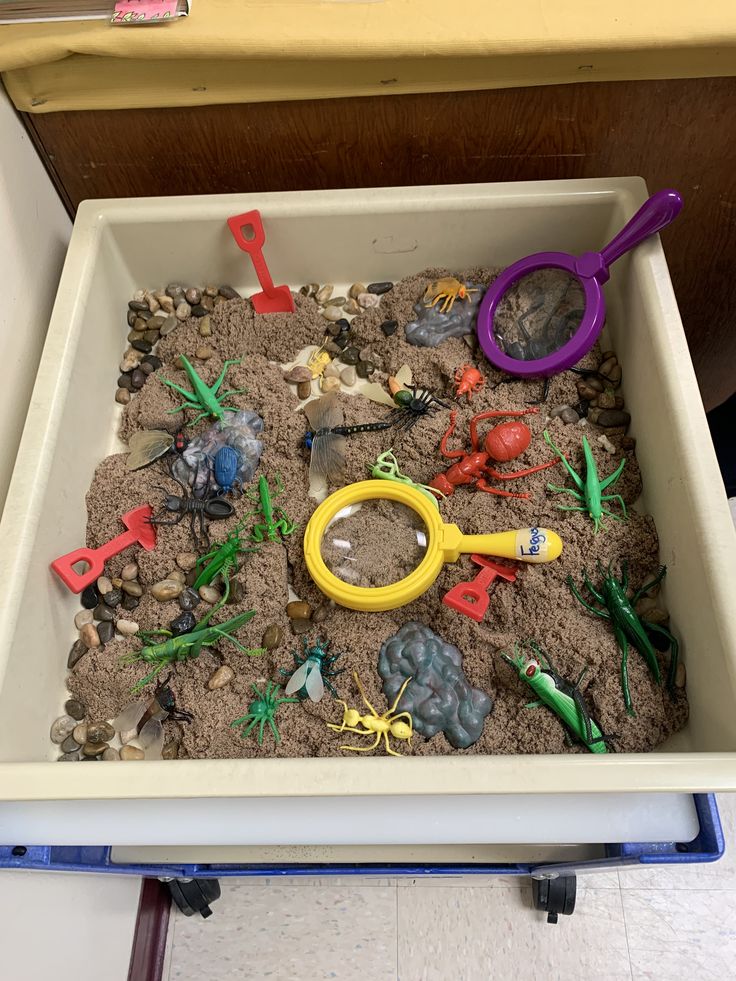
What you need: Kinetic sand, large toy insect figures, and a shallow bin.
How to set it up: Shape the sand into a small landscape with gentle hills and flat areas. Place the toy insects in different parts of the habitat.
Invite your child to move the insects around and imagine where they might hide. You can explain in simple language that different insects live in different environments.
What children learn: The activity encourages observation, imaginative play, and curiosity about insects.
28. Nature Trail
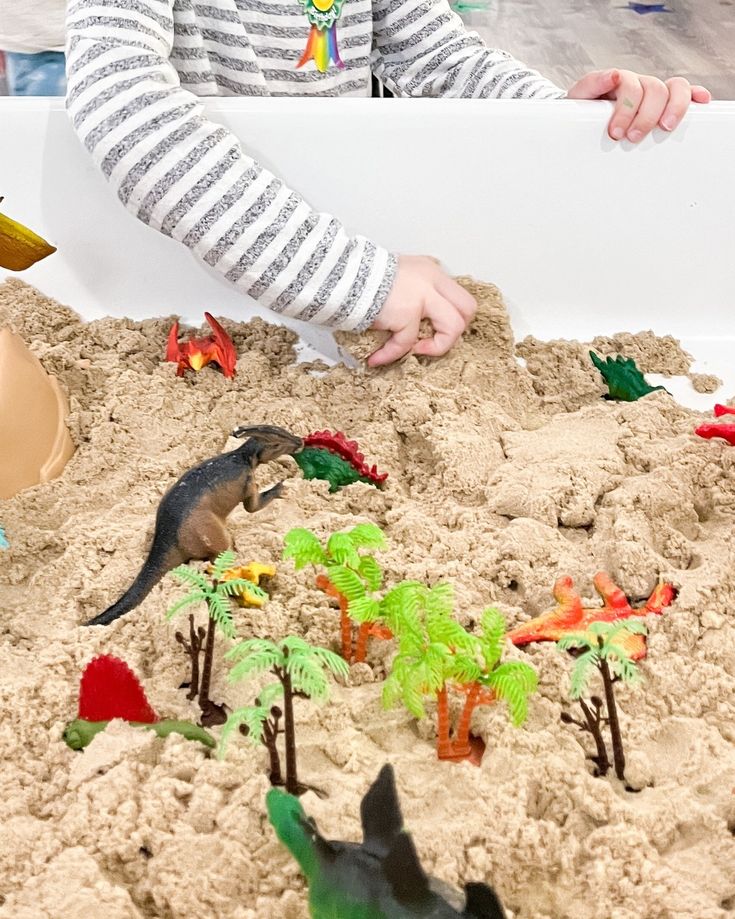
What you need: Kinetic sand, large toy animal figures, a scoop, and a shallow tray.
How to set it up: Use the scoop to make a winding trail through the sand. Add gentle hills and open spaces along the route.
Give your child an animal figure and invite them to guide it along the trail. They can decide where the animal stops, what it discovers, and where it goes next.
What children learn: Nature-trail play supports storytelling, spatial awareness, and an understanding of simple directions.
Alphabet and Number Kinetic Sand Sensory Bin Ideas
Kinetic sand can be used for early learning when activities are kept playful and appropriate for the child’s age. Letter and number molds are especially helpful for introducing symbols through touch and movement.
29. Alphabet Molding
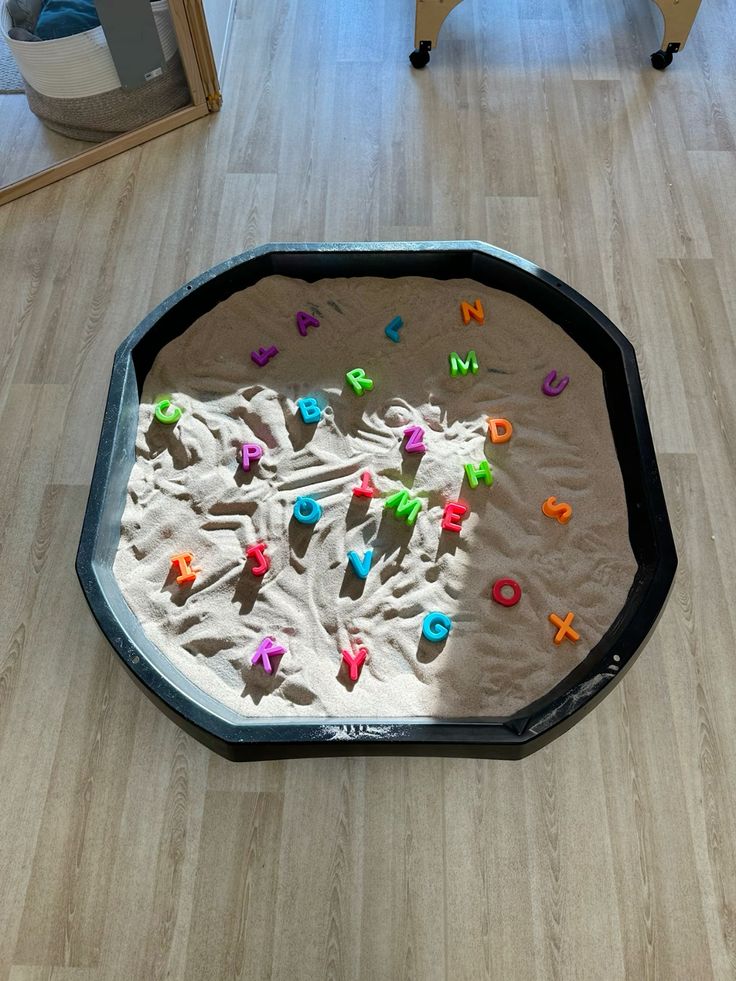
What you need: Kinetic sand and large letter molds.
How to set it up: Spread the sand into a smooth layer and choose one or two letter molds. Demonstrate how to fill a mold with sand, press it gently, and lift it to reveal the letter.
Say the letter’s name as you make it. For a familiar letter, such as A, you can mention a word that begins with that sound.
Let your child choose the next letter and try making it independently.
What children learn: This activity introduces letter recognition and connects visual symbols with spoken language.
30. Name Practice
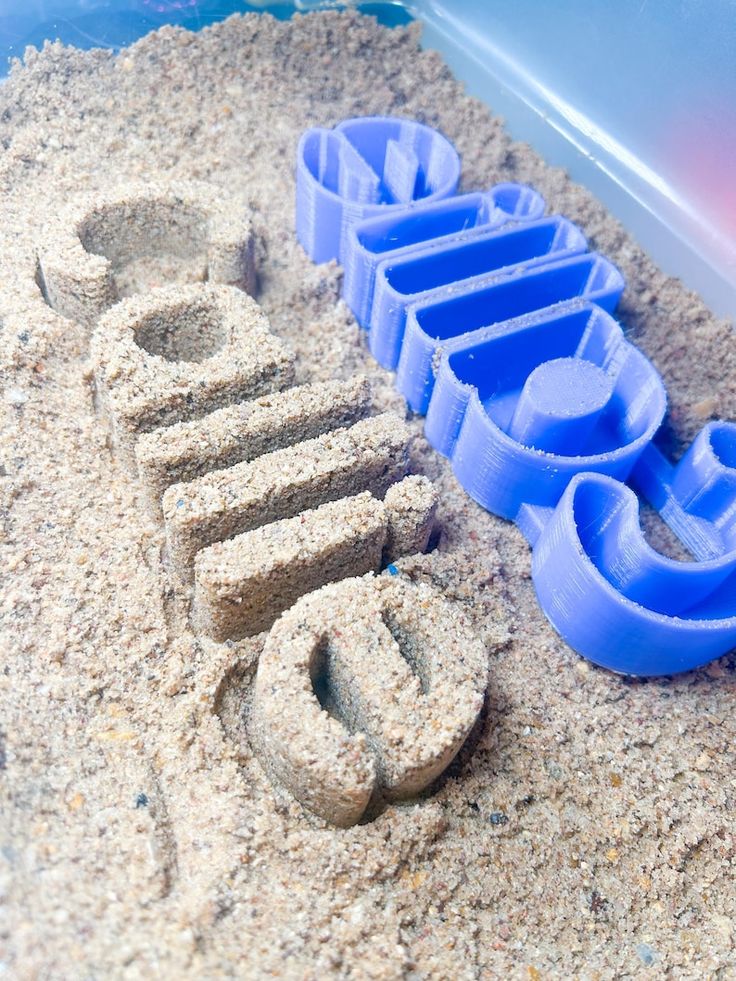
What you need: Kinetic sand, large letter molds, and a written example of your child’s name placed outside the bin.
How to set it up: Write the child’s name clearly on a piece of paper. Choose the letter molds needed to make the name and place them beside the sand.
Start with the first letter. Show your child how to make it in the sand, then identify the next letter using the written example. Work through the name one letter at a time.
Keep the activity relaxed and focus on recognizing letters rather than expecting perfect spelling or formation.
What children learn: Name practice can support letter recognition, visual matching, and early literacy.
31. Number Hunt
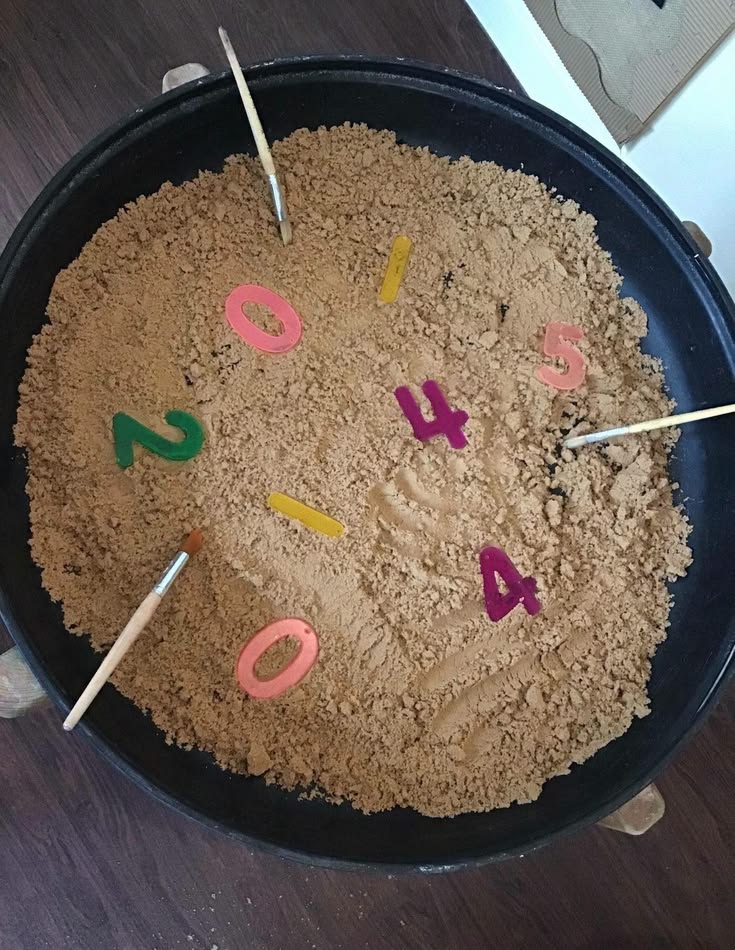
What you need: Kinetic sand, large number shapes, and a collection bowl.
How to set it up: Partially bury a few large number shapes in the sand. Tell your child that the numbers are hidden and need to be found.
Demonstrate how to scoop the sand gently until a number appears. Ask your child to name the number if they know it, then place it in the bowl.
For children who are just beginning to recognize numbers, start with only two or three shapes.
What children learn: The activity supports number recognition, observation, and matching.
32. Counting Scoops
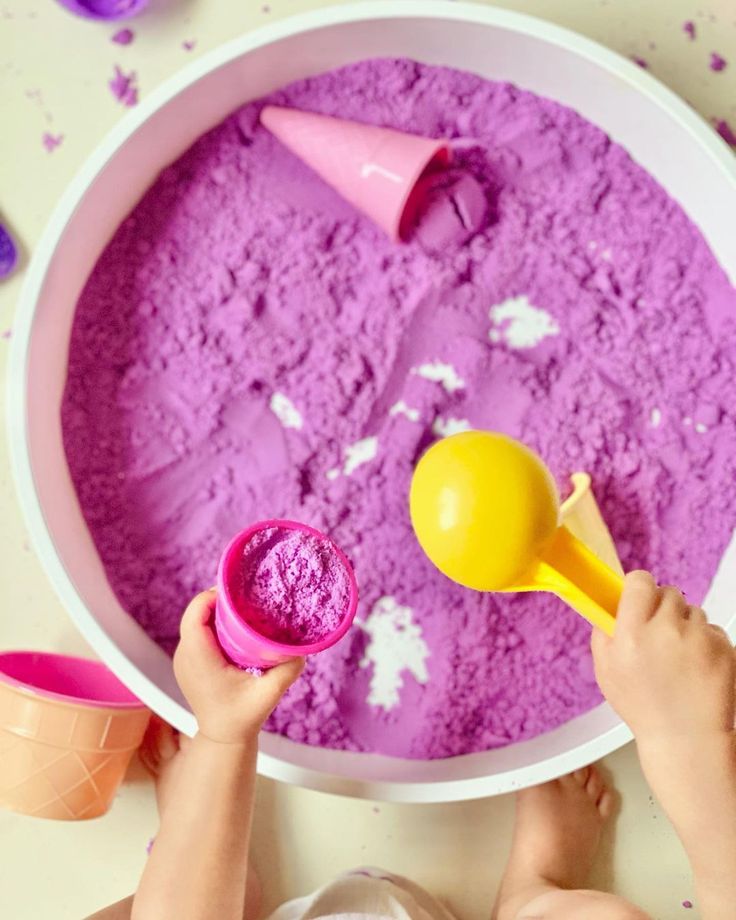
What you need: Kinetic sand, a sturdy scoop, and a clear, unbreakable cup.
How to set it up: Place the empty cup beside the bin and demonstrate how to add one scoop of sand at a time. Count aloud as each scoop goes into the cup.
Invite your child to copy you. Once the cup is full, empty it and begin again with a different number of scoops.
For older preschoolers, compare the number of scoops needed to fill two different containers.
What children learn: Counting scoops introduces one-to-one counting, quantity, and simple comparisons.
33. Number Matching
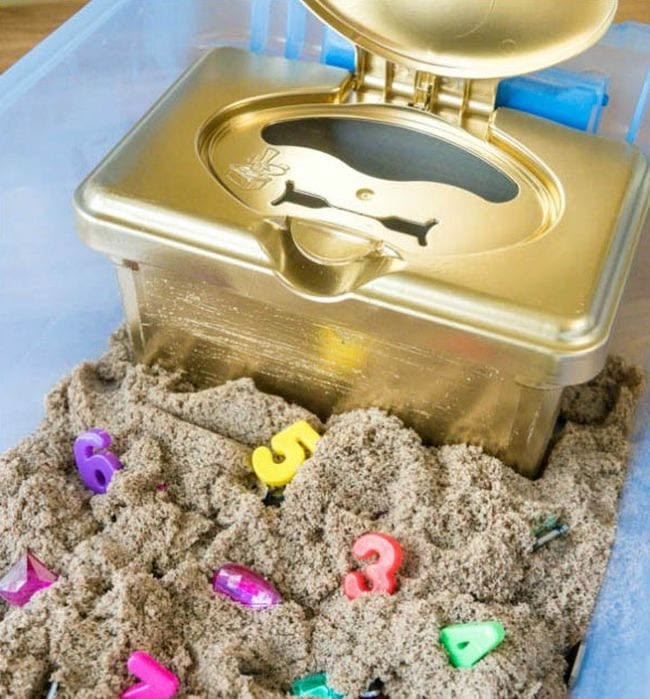
What you need: Kinetic sand, large number molds, and number cards.
How to set it up: Place two or three number cards beside the sensory bin. Ask your child to find the matching number mold and make that number in the sand.
After creating the shape, place it next to the corresponding card. Continue with additional numbers as your child becomes comfortable.
What children learn: Number matching provides practice in visual recognition, early numeracy, and attention.
Colorful and Shape-Based Kinetic Sand Sensory Bin Ideas
Color and shape activities help children explore similarities, differences, and patterns. They can also be adapted to different learning stages by changing the number of colors or shapes available.
34. Color Sorting
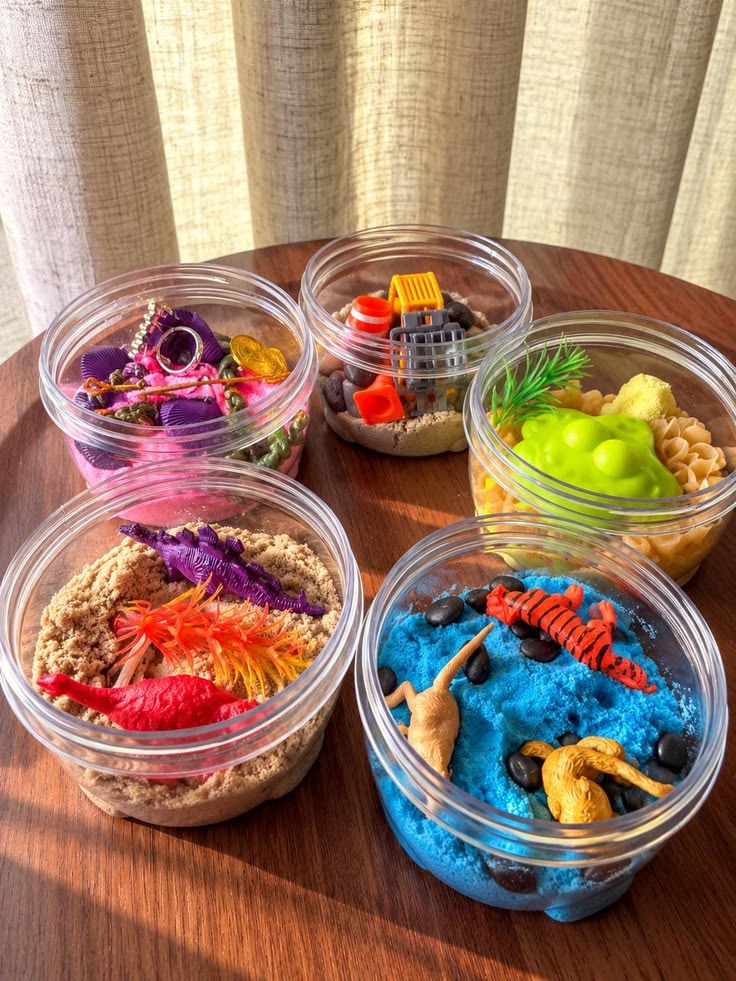
What you need: Kinetic sand in different colors, separate sections of a tray, and large matching color cards.
How to set it up: If you have several colors of kinetic sand, place each color in its own section. Show your child a color card and ask them to identify the matching sand.
Invite them to make small piles or shapes using each color. If you have only one color of sand, use large colored accessories or picture cards instead.
What children learn: This activity encourages color recognition, visual matching, and categorization.
35. Rainbow Layers
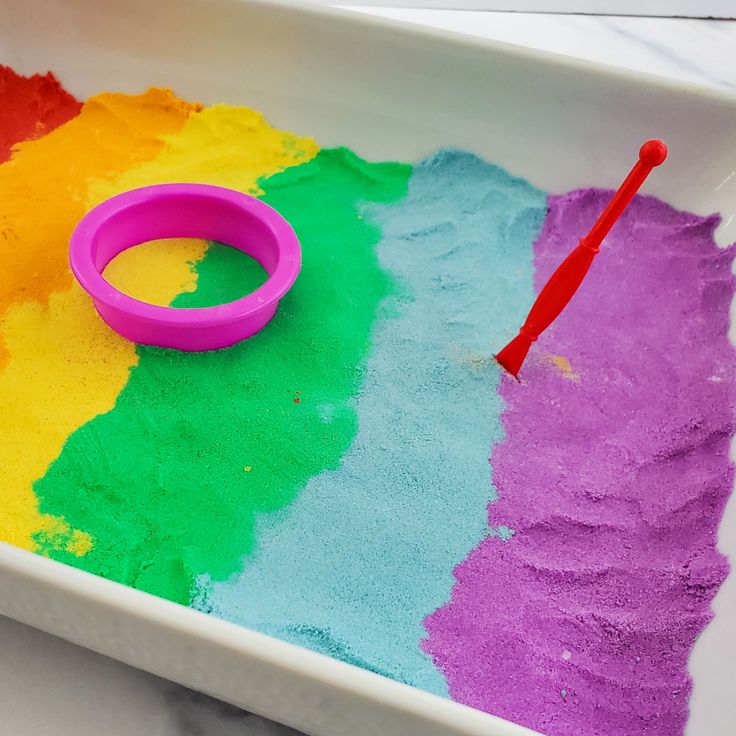
What you need: Different colors of kinetic sand and a suitable clear-sided container.
How to set it up: Place a small amount of one color into the container and press it gently into a layer. Add a second color on top and repeat until you have several layers.
Let your child choose the order of the colors. Observe the layers together and ask which color appears at the bottom or top.
Follow the manufacturer’s guidance about combining different sand colors, as they may blend together during play.
What children learn: Rainbow layers introduce color names, ordering, and simple pattern exploration.
36. Shape Matching
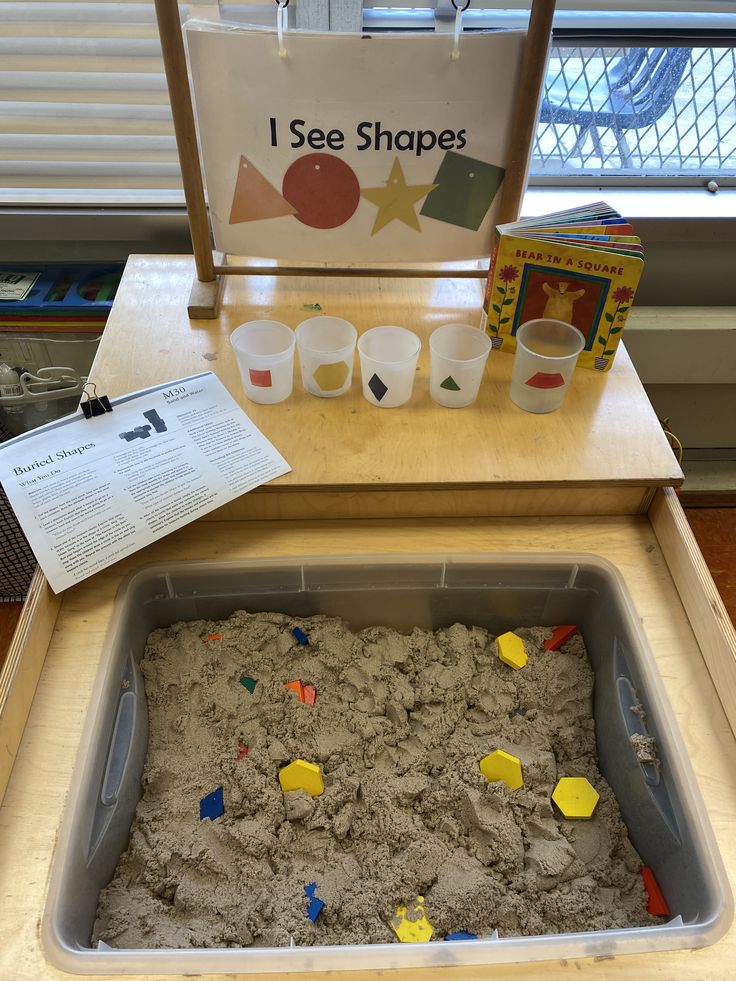
What you need: Kinetic sand, large shape molds, and picture cards showing circles, squares, triangles, and other familiar shapes.
How to set it up: Place the cards in a row beside the sensory bin. Choose a card and help your child find the matching mold.
Press the mold into the sand, lift it, and compare the resulting shape with the picture. Repeat with other shapes and invite your child to select the next one.
What children learn: Children practice matching, shape recognition, and visual discrimination.
37. Pattern Making
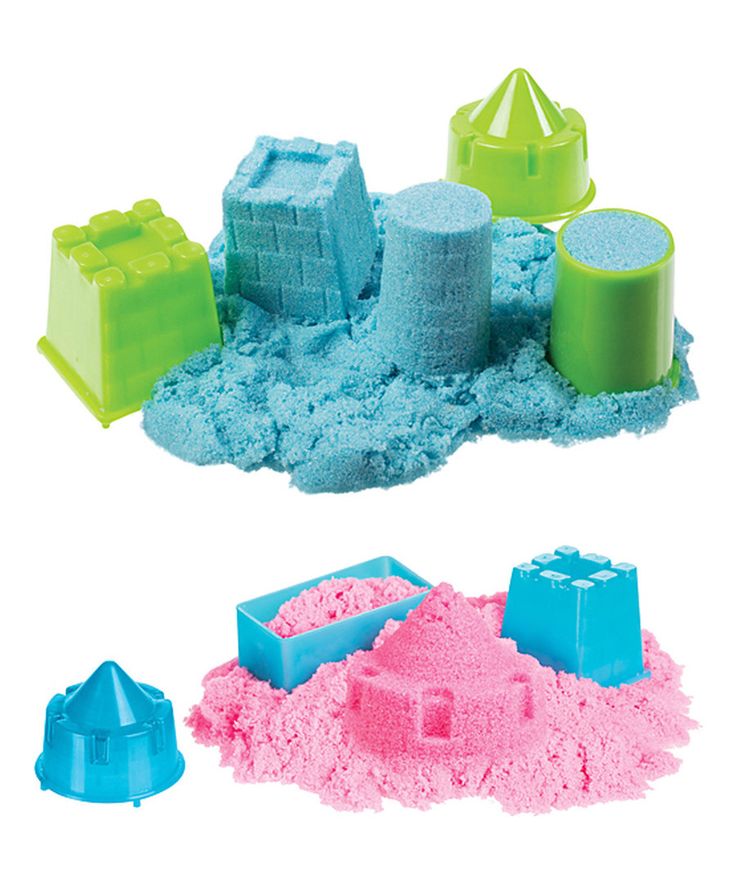
What you need: Kinetic sand in different colors or large shape molds of different designs.
How to set it up: Create a simple pattern, such as a red shape followed by a blue shape, if you have colored sand. Alternatively, make a circle followed by a square using molds.
Ask your child to continue the pattern by choosing what should come next. Start with a short sequence and add more elements as their understanding develops.
What children learn: Pattern activities introduce sequencing, observation, and early mathematical thinking.
38. Shape Bakery
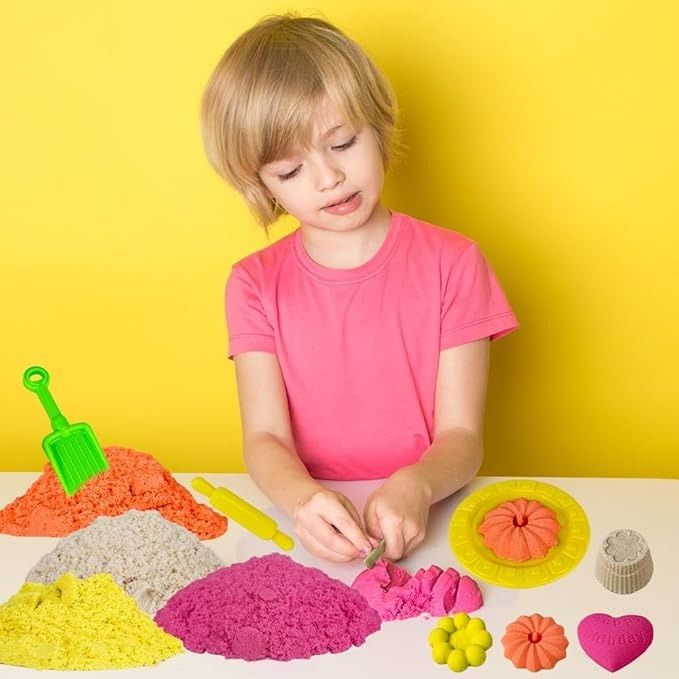
What you need: Kinetic sand, large cookie cutters, a rolling tool, and a pretend baking tray.
How to set it up: Flatten the sand into a thin layer. Invite your child to choose a shape cutter and press it into the sand to create a pretend cookie.
Arrange the cookies on the tray and sort them by shape. You can ask your child to make three circles, two stars, or a group of matching shapes.
What children learn: Shape bakery play combines creativity with counting, matching, and sorting.
Treasure Hunt and Fairy Garden Kinetic Sand Sensory Bin Ideas
Children who love make-believe can turn kinetic sand into a setting for treasure hunts, magical gardens, and imaginative adventures.
39. Treasure Chest
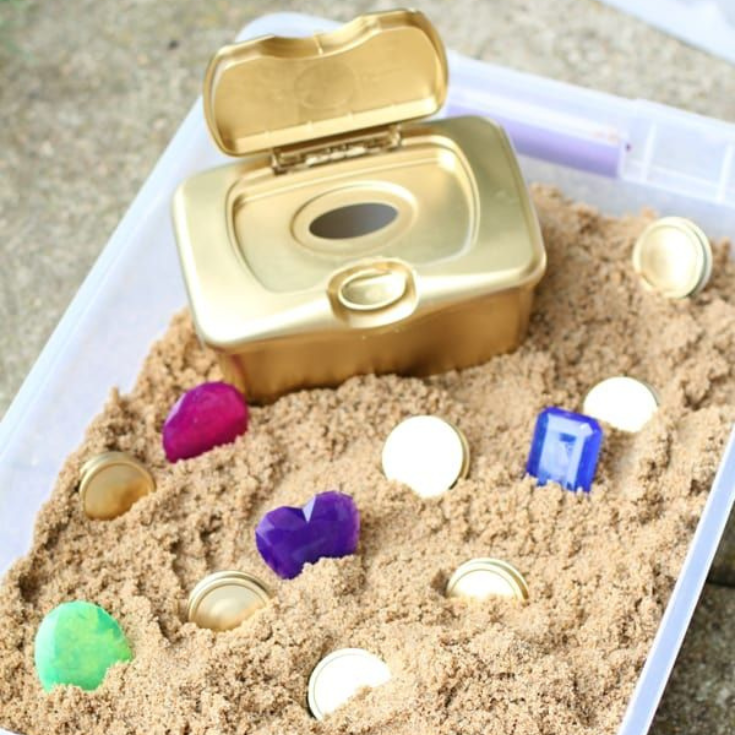
What you need: Kinetic sand, a sturdy toy treasure chest, large solid treasure tokens, and a scoop.
How to set it up: Place the chest in the bin and partially cover a few large treasure tokens with sand. Show your child how to uncover the objects and place them in the chest.
Once the treasure has been found, invite your child to count the pieces or sort them by color. You can also ask them to invent a story about who owns the treasure.
What children learn: The activity encourages observation, counting, sorting, and imaginative storytelling.
40. Pirate Island
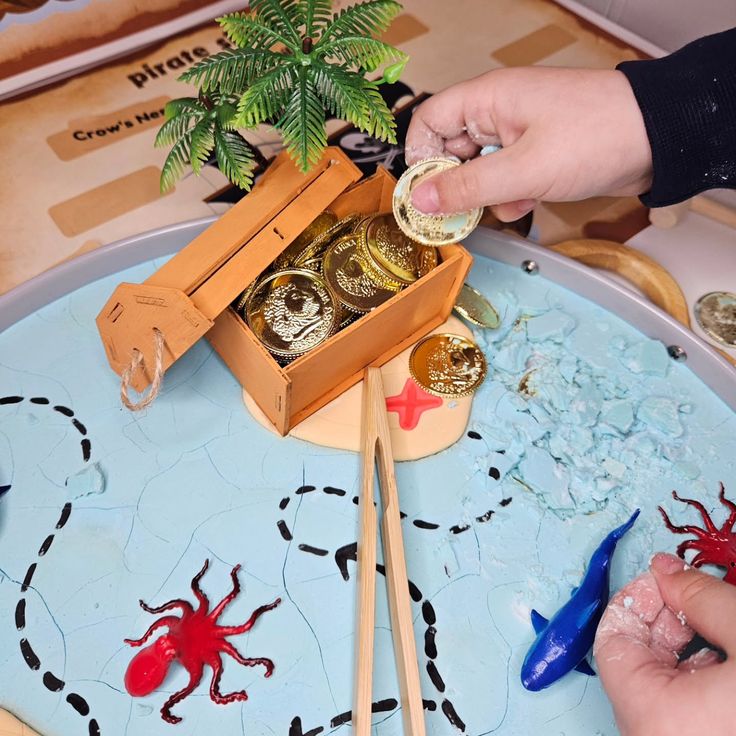
What you need: Kinetic sand, a shallow tray, large pirate-themed toy figures, and a sturdy toy boat.
How to set it up: Shape the sand into an island with a raised hill and a flat beach area. Place the boat beside the island and arrange the figures around the scene.
Invite your child to imagine that the pirates have arrived to explore the island. They can build a hideout, create pathways, and search for pretend treasure.
What children learn: Pirate-island play supports creative thinking, storytelling, and spatial awareness.
41. Fairy Garden
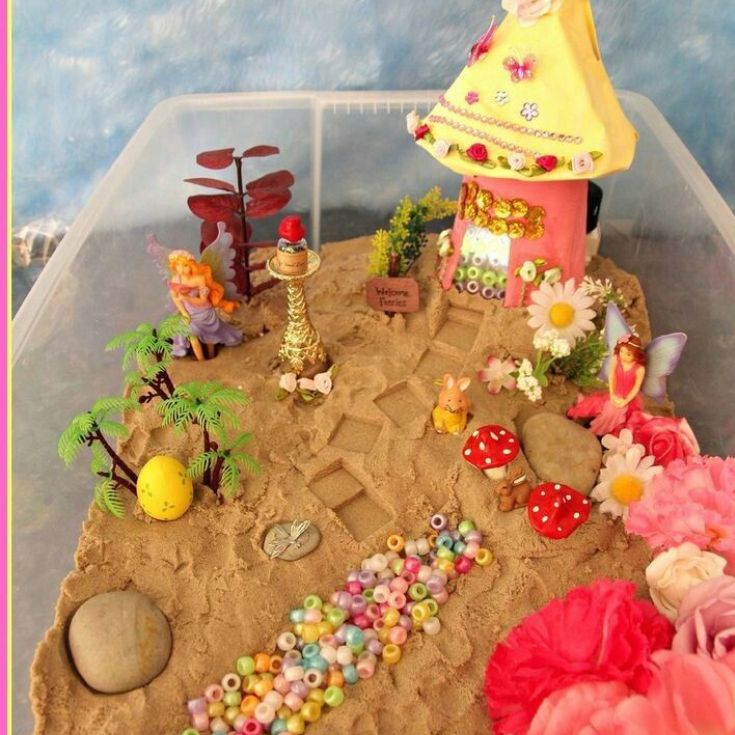
What you need: Kinetic sand, large fairy-themed toy figures, sturdy pretend flowers, and a shallow bin.
How to set it up: Create a small landscape using hills and flat areas of sand. Arrange the flowers around the edges and place the fairy figures in different spots.
Invite your child to design a garden for the fairies. They can build a pretend home, make pathways, and create stories about what the fairies do throughout the day.
What children learn: This activity encourages imagination, language development, and creative planning.
42. Magic Castle
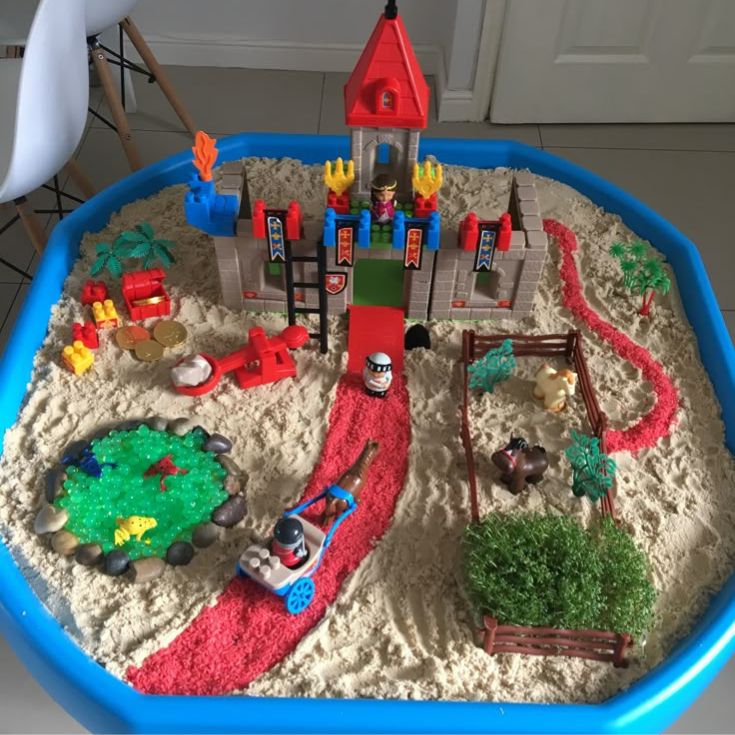
What you need: Kinetic sand, large castle molds, sturdy toy figures, and a shallow tray.
How to set it up: Help your child build several towers using the molds. Arrange the towers into a castle and create a pathway leading to the entrance.
Invite your child to choose who lives in the castle and invent a story about a visitor arriving. They can add new towers or change the castle’s layout as the story develops.
What children learn: Castle building encourages spatial reasoning, storytelling, creativity, and persistence.
Space-Themed and Seasonal Kinetic Sand Sensory Bin Ideas
Space and seasonal activities introduce new themes and keep sensory play interesting throughout the year. They can also inspire simple conversations about the world beyond a child’s everyday surroundings.
43. Moon Surface
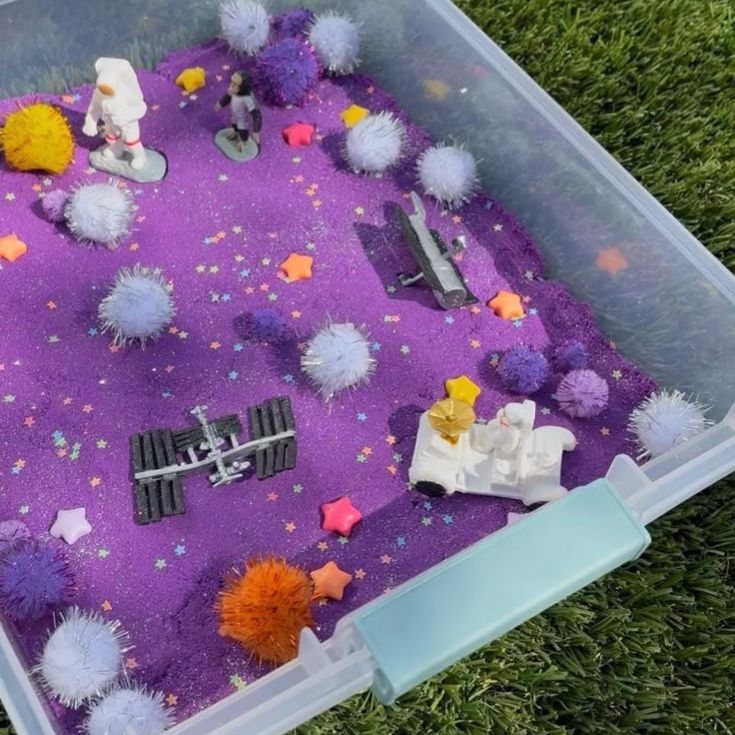
What you need: Kinetic sand, large astronaut or moon-exploration toys, and a shallow tray.
How to set it up: Spread the sand across the tray and create several shallow craters using the bottom of a suitable cup or a large rounded mold.
Place the astronaut figure on the surface and invite your child to explore the pretend moon. They can move the figure between craters and make tracks in the sand.
Explain that the moon has a rocky surface and that astronauts use special equipment when exploring space.
What children learn: This activity encourages imaginative play and introduces basic space concepts.
44. Astronaut Adventure
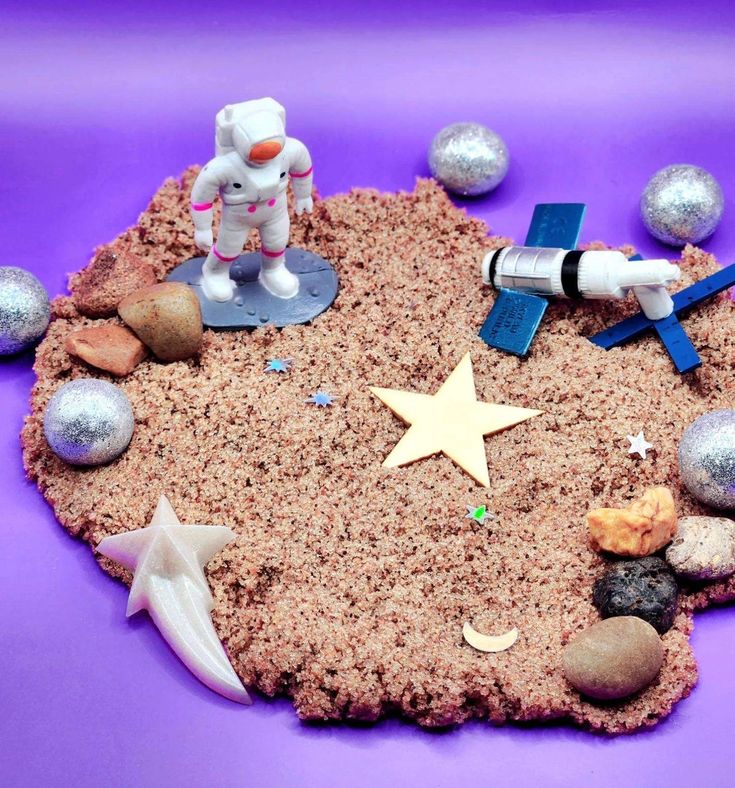
What you need: Kinetic sand, large astronaut figures, sturdy toy rockets, and a shallow bin.
How to set it up: Create a flat area for the pretend launch site and a raised section for the landing area. Place the rocket and astronaut figures in the bin.
Invite your child to prepare for a pretend mission. They can count down before the rocket launches, move the astronaut to a new area, and describe what the astronaut discovers.
What children learn: The activity supports sequencing, counting, and storytelling.
45. Winter Wonderland
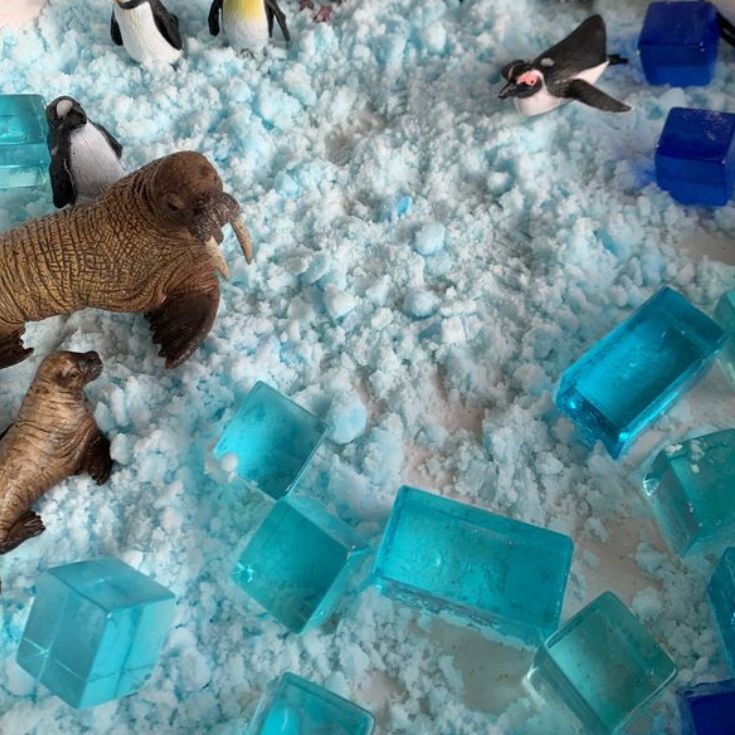
What you need: White kinetic sand, large winter-themed toy figures, and a shallow tray.
How to set it up: Spread the white sand across the tray and shape it into gentle hills. Add large toy figures suitable for your child’s age and let them explore the pretend winter landscape.
Children can create snowy paths, build small hills, and invent stories about a winter adventure.
What children learn: This activity encourages imaginative play and provides an opportunity to discuss winter weather and seasonal changes.
46. Spring Garden
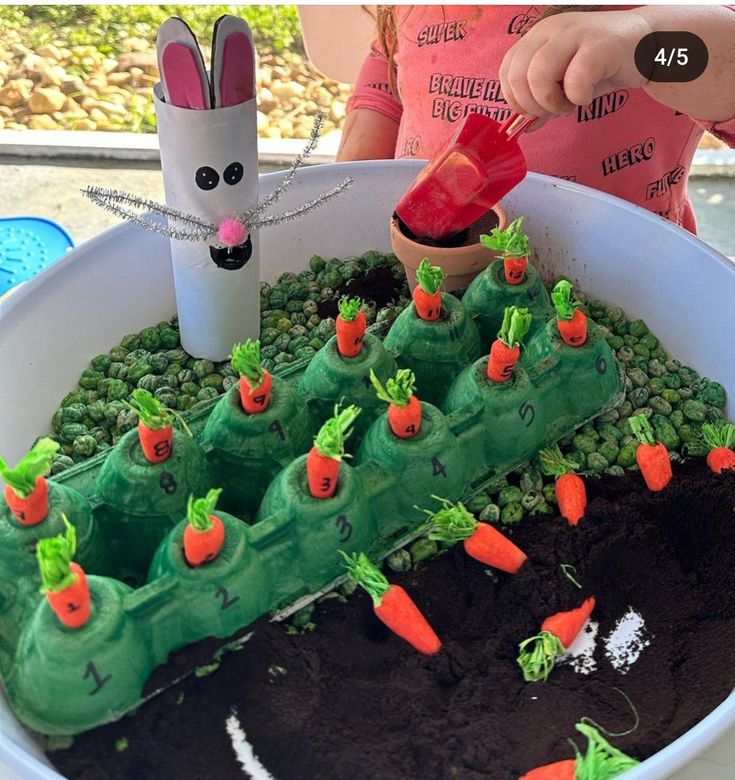
What you need: Kinetic sand, large flower molds, sturdy toy flowers, and a shallow bin.
How to set it up: Flatten the sand and create several pretend garden beds. Invite your child to press flower molds into the sand and arrange the toy flowers around the garden.
Talk about how plants grow, what they need to thrive, and how gardens can look different throughout the year.
What children learn: Spring-themed play introduces seasonal vocabulary, nature concepts, and creative expression.
Learning-Based Kinetic Sand Sensory Bin Ideas for Fine Motor Skills
Some kinetic sand sensory bin ideas are particularly useful for encouraging controlled hand movements and simple problem-solving. Keep the tools appropriate for the child’s age and allow plenty of time for experimentation.
47. Pinch and Roll
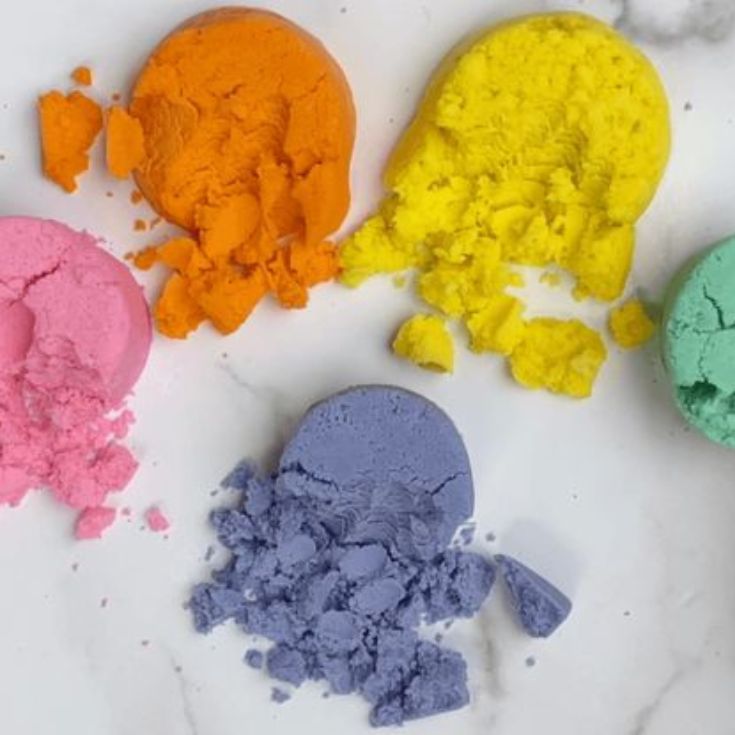
What you need: Kinetic sand and a shallow tray.
How to set it up: Demonstrate how to take a small amount of sand and roll it gently between your hands to form a ball. Then show your child how to press the ball flat or reshape it.
Invite them to create several balls or other simple shapes. Keep the activity relaxed and let them explore different ways to change the sand’s form.
What children learn: Pinching, rolling, and pressing provide opportunities to practice controlled finger and hand movements.
48. Scoop Transfer
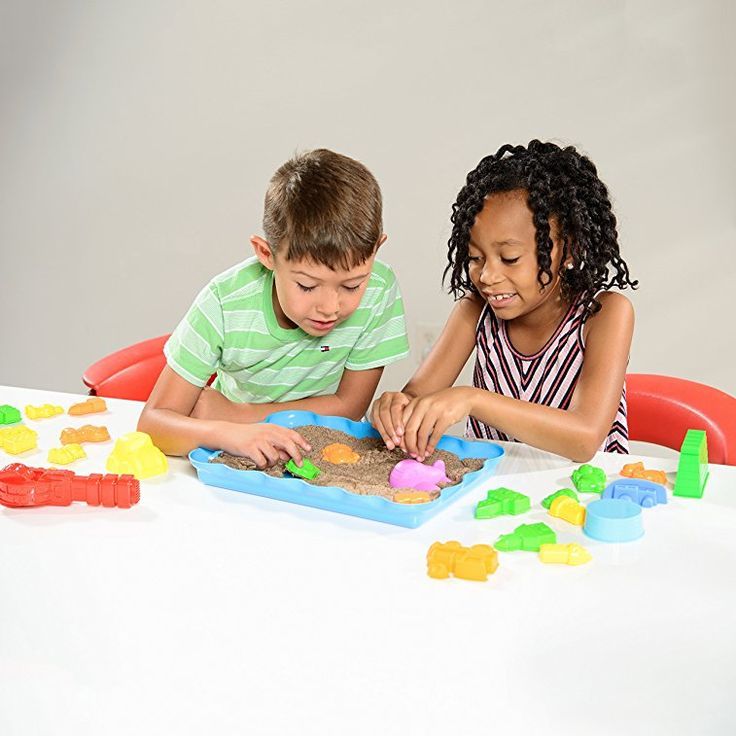
What you need: Kinetic sand, two sturdy containers, and a child-safe scoop.
How to set it up: Place the containers side by side. Fill one with sand and leave the other empty.
Demonstrate how to move one scoop at a time from the full container to the empty one. Encourage your child to continue until all the sand has been transferred, then reverse the activity.
What children learn: Scoop transfer encourages hand-eye coordination, concentration, and controlled movement.
49. Mold and Release
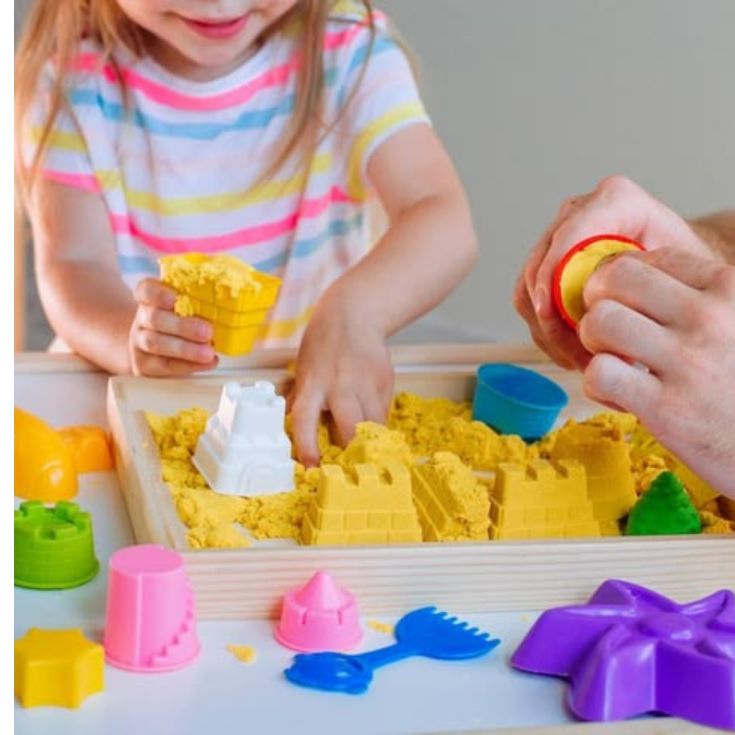
What you need: Kinetic sand, large molds, and a shallow tray.
How to set it up: Fill a mold with sand and press it gently so the sand holds its shape. Turn the mold over and lift it slowly.
Let your child try the same process. If the shape breaks apart, show them how to add a little more sand or press it more evenly before trying again.
What children learn: Children practice hand control, persistence, and understanding how pressure affects the sand’s shape.
50. Build and Balance
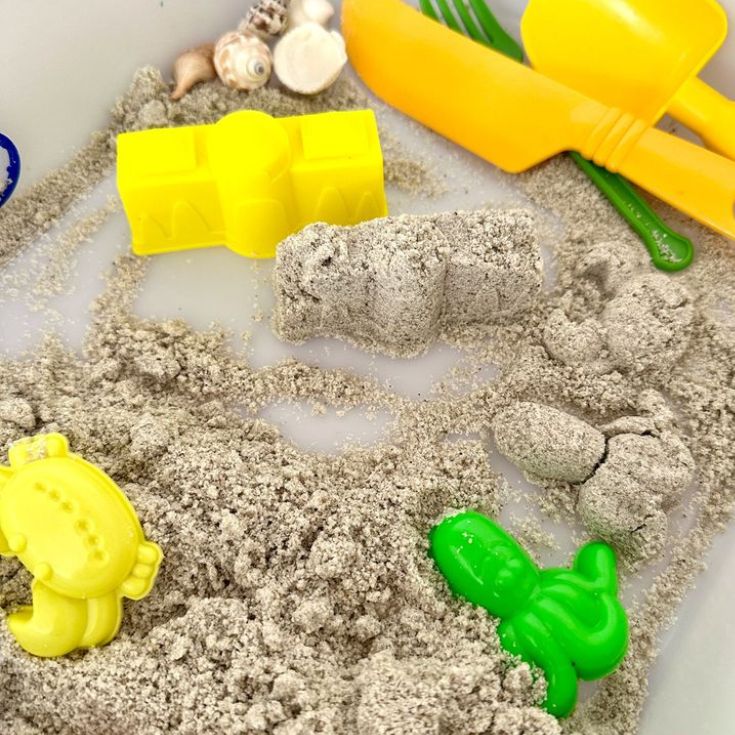
What you need: Kinetic sand, large molds, and a flat tray.
How to set it up: Help your child create two or three sturdy sand shapes. Arrange one shape on the tray and show them how to place another shape beside it or on top if it balances safely.
Invite them to experiment with different arrangements. If a tower falls, encourage them to rebuild it with a wider base.
What children learn: This activity encourages spatial reasoning, experimentation, and problem-solving.
51. Sort and Count
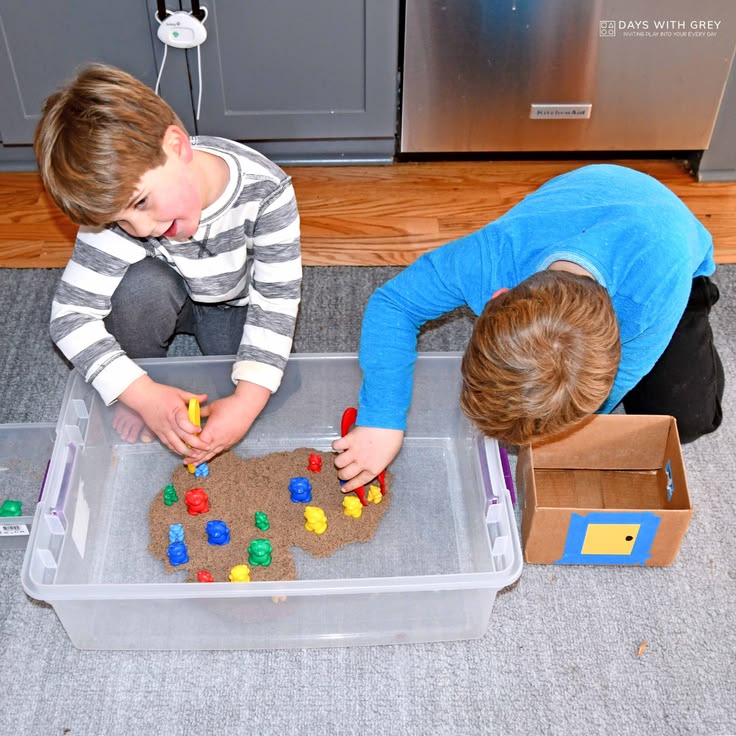
What you need: Kinetic sand, large solid toy shapes, and two or three unbreakable bowls.
How to set it up: Place the toy shapes in the sand and ask your child to uncover them. Once they are collected, choose a sorting rule, such as color or shape.
Demonstrate how to place matching items in the same bowl. Count the items together and compare which bowl contains more.
What children learn: Children practice categorization, counting, visual recognition, and simple comparisons.
Frequently asked questions about kinetic sand sensory bin ideas
What age is appropriate for kinetic sand sensory play?
The appropriate age depends on the product’s labeling and the child’s developmental stage. Always follow the manufacturer’s guidance and supervise closely. For children who are likely to put sand or accessories in their mouths, a different sensory activity may be safer.
What can children learn from kinetic sand sensory bins?
These activities can offer opportunities to practice fine motor movements, hand-eye coordination, creativity, language, counting, sorting, and problem-solving. The specific benefits depend on the activity and the child’s stage of development.
How can I make a kinetic sand sensory bin at home?
Choose a shallow, stable tray, add a manageable amount of commercially prepared kinetic sand, and select a few age-appropriate tools or toys. Introduce a simple activity, such as scooping, shaping, or matching, and demonstrate how to begin.
How do I keep kinetic sand from making a mess?
Place the tray on an easy-to-clean surface and keep the tools inside the bin whenever possible. When playtime ends, return the sand to its designated container according to the manufacturer’s storage instructions.
Can kinetic sand be reused?
Many commercial products are designed for repeated play when stored and handled correctly. Keep the sand free of food, dirt, and other contaminants, and follow the manufacturer’s care guidance.
Conclusion on kinetic sand sensory bin ideas
Kinetic sand sensory bin ideas offer parents and caregivers a simple way to combine playtime with learning. From dinosaur fossil digs and construction sites to pretend bakeries, alphabet activities, and magical gardens, these sensory experiences give children opportunities to explore, create, and practice new skills.
You do not need complicated materials or expensive toys to make sensory play meaningful. Start with a simple bin, choose a theme your child enjoys, and let curiosity guide the activity. You can introduce new ideas gradually and reuse the same materials in different ways to keep playtime interesting.
With appropriate materials, age-appropriate activities, and close supervision, kinetic sand sensory play can become an enjoyable part of a child’s everyday learning routine.