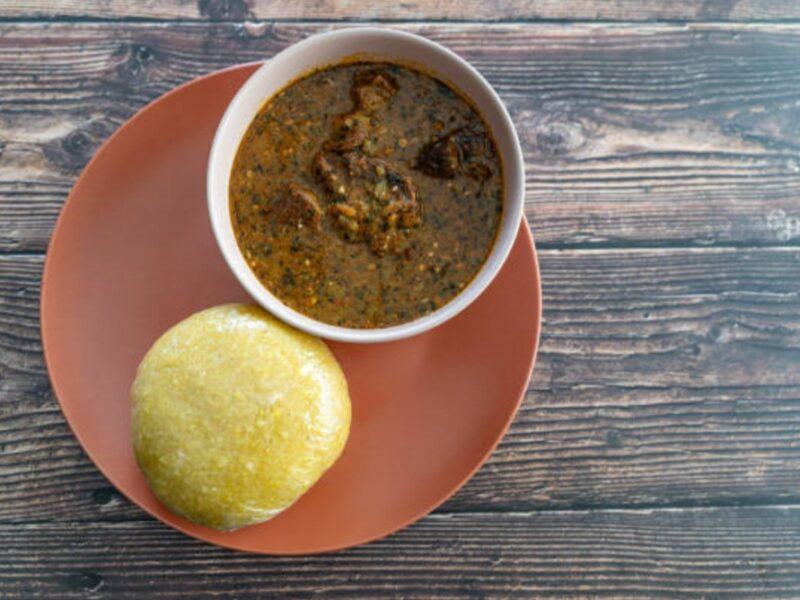
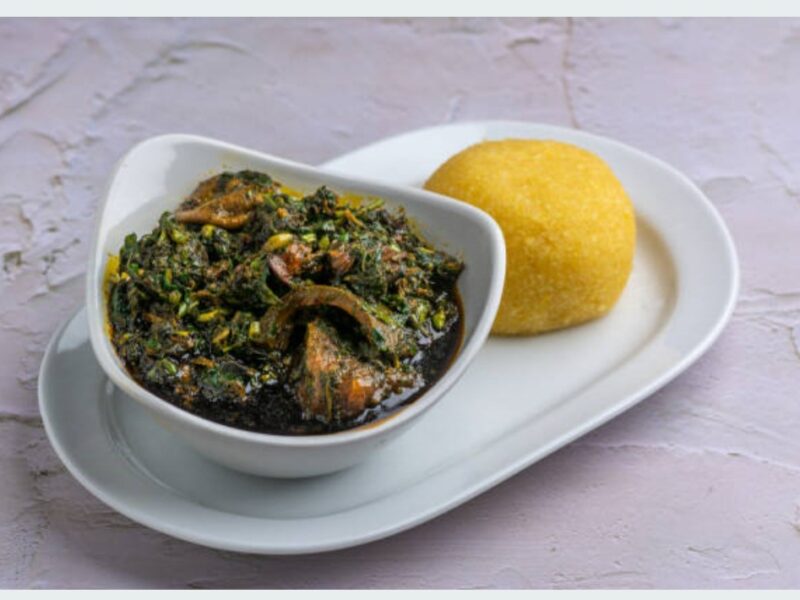
Learning how to cook Uziza Soup with Palm Fruit Extract & Ogiri unlocks the secret to the most authentic and flavorful version of the Nigerian cuisine.
Uziza soup, also known as Ofe Uziza, is a quintessential Nigerian delicacy, particularly cherished in the South Eastern and Delta regions.
This aromatic soup, celebrated for its distinct peppery taste from the uziza leaf (Piper guineense), is more than just a meal;
While there are many ways to prepare it, cooking it with palm fruit extract (the same base used for Banga soup) and the traditional fermented condiment “ogiri” takes the flavor to an entirely new level of richness, depth, and authenticity.
The goal? A soup that is hearty and flavorful but never too watery or too thick, just the perfect, velvety consistency that coats the back of a spoon.
Whether you are a seasoned cook or a beginner eager to explore Nigerian cuisine, this guide will walk you through everything you need to know to create a delicious pot of Uziza soup with a luscious palm fruit base right in your kitchen.
Health Benefits of Uziza Leaves
Beyond its incredible taste, Uziza soup packs a powerful nutritional punch. The uziza leaf is not just a flavor enhancer; it’s a functional food with numerous health benefits.
Research highlights that uziza is a natural antioxidant, displaying high scavenging activity against free radicals . It is also known for its anti-inflammatory and antimicrobial properties . Adding this soup to your diet is a delicious way to boost your intake of essential vitamins and minerals.
· Rich in Antioxidants: Helps combat oxidative stress in the body .
· Nutrient-Dense: Contains essential vitamins like A, C, E, and K, as well as minerals such as iron, calcium, and phosphorus .
· Medicinal Properties: Traditionally used for its antibacterial and antifungal benefits .
Ingredients for the Perfect Uziza Soup (Palm Fruit & Ogiri Version)
The beauty of Uziza soup lies in its flexibility. You can adjust the proteins based on your preference. Here is a comprehensive list of ingredients needed for this rich, traditional variation.
1. Base: Palm Fruit Extract (Banga) This is your primary cooking liquid. 1(litre)
2. Key Flavor: Ogiri (Fermented Locust Beans) 1-2 tablespoons
3. Vegetables:
· Fresh Uziza leaves: A generous bunch, washed and sliced into thin shreds.
4. Proteins (Use a mix for a richer flavor):
· Assorted meat: 500g – 1kg of beef, goat meat, or Kanda (cow skin).
· Dry fish: 2-3 pieces of catfish, cleaned and deboned.
· Stockfish: 250g, pre-soaked and cut into pieces.
· Fresh periwinkle/snails: (Optional)
5. Thickeners (Choose one, use sparingly to control consistency):
· Achi powder: 2-3 tablespoons, mixed with cold water to form a smooth paste. It gives a smooth, slightly chewy texture .
· Cocoyam (Ede ofe): 4-5 medium corms, boiled, peeled, and pounded into a smooth paste .
· Ofor powder: Similar to achi, used in small quantities .
· Ground crayfish: 3-4 tablespoons.
· Pepper: 2-3 Scotch bonnet (ata rodo) or Ghana pepper, blended or ground (adjust to taste).
· Seasoning cubes: 2-3 cubes (Maggi or Knorr).
· Salt: To taste.
· Ground uziza seeds (optional): 1 teaspoon, for an extra layer of peppery flavor .
The Secret to the Perfect Consistency
The hallmark of a well-made Uziza soup (especially the palm fruit version) is its texture. It should be “draw” or “slightly thick” luxurious enough to cling to your swallow, but fluid enough to be sipped from a spoon.
· If it’s too watery: It means you haven’t added enough thickener (achi/cocoyam), or you added your vegetables too early, which can release water. You can fix this by mixing a tiny bit more achi paste with a little palm oil and stirring it in.
· If it’s too thick: It will feel heavy and pasty. You can adjust this by adding a little warm water or extra meat stock until you reach the desired consistency.
The goal is a velvety, smooth texture that is neither a porridge nor a broth.
Step-by-Step Guide: How to Cook Uziza Soup with Palm Fruit Extract & Ogiri
Follow these simple steps to create a hearty and flavorful pot of Uziza soup using palm fruit extract and ogiri.
Step 1: Prepare Your Proteins
Wash and season your chosen meats (beef, goat meat, stockfish) with, salt, and seasoning cubes. Place them in a pot with a small amount of water and allow them to steam for about 20 minutes to extract the flavor, then add more water and cook until they are tender . If using dry fish, wash it properly, remove the entrails to avoid bitterness, and set aside .
Step 2: Prepare the Palm Fruit Extract
If you are using fresh palm fruits, boil and pound them, then extract the juice with water. If you are using a store-bought extract (like the frozen or tetra pack types), simply measure out the required amount. The consistency should be smooth and rich.
Step 3: Prepare the Thickener and Vegetables
· For the thickener: If using cocoyam, boil it until soft, peel off the skin, and pound or blend it into a smooth paste . If using achi powder, mix it with a little palm oil to form a smooth paste, ensuring there are no lumps.
· For the vegetables: Wash the fresh uziza leaves thoroughly and slice them into thin shreds. Set aside.
Step 4: Build the Soup Base (The Ogiri Moment)
- Pour your prepared palm fruit extract into a pot and allow to boil for 20-30 minutes
This is to allow the palm fruit base to cook properly.
- Add the cooked meat (along with its stock)ground crayfish, and pepper. Now, add your ogiri. If it is hard, dissolve it in a little warm water before adding it to the pot. Stir everything together and allow it to boil.
Step 5: Adjust the Consistency (Add the Thickener)
Once the base has boiled and the oil has floated to the top, it is time to thicken. This is where you control the texture.
Gently add your thickener (achi paste or cocoyam paste) to the boiling pot a little at a time, stirring continuously to prevent lumps.
· Stop adding the thickener when the soup is just one level thinner than you want it to be. Remember, it will thicken slightly as it cools and as you add the fish.
Step 6: Add the Fish
Now, add your washed dry fish and any other pre-cooked delicate protein like periwinkles or snails. Cook for another 10 minutes. Taste the soup and adjust the salt and seasoning.
Step 7: The Final Touch; Add Uziza Leaves
Turn off the heat or reduce it to the lowest setting. Add the sliced uziza leaves and stir them into the soup. Do not cover the pot immediately or cook the leaves for too long (ideally, no more than 2 minutes), as this can make them bitter and cause the soup to change color . The residual heat will cook the leaves perfectly, preserving their vibrant green color and peppery aroma.
Step 8: Serve and Enjoy
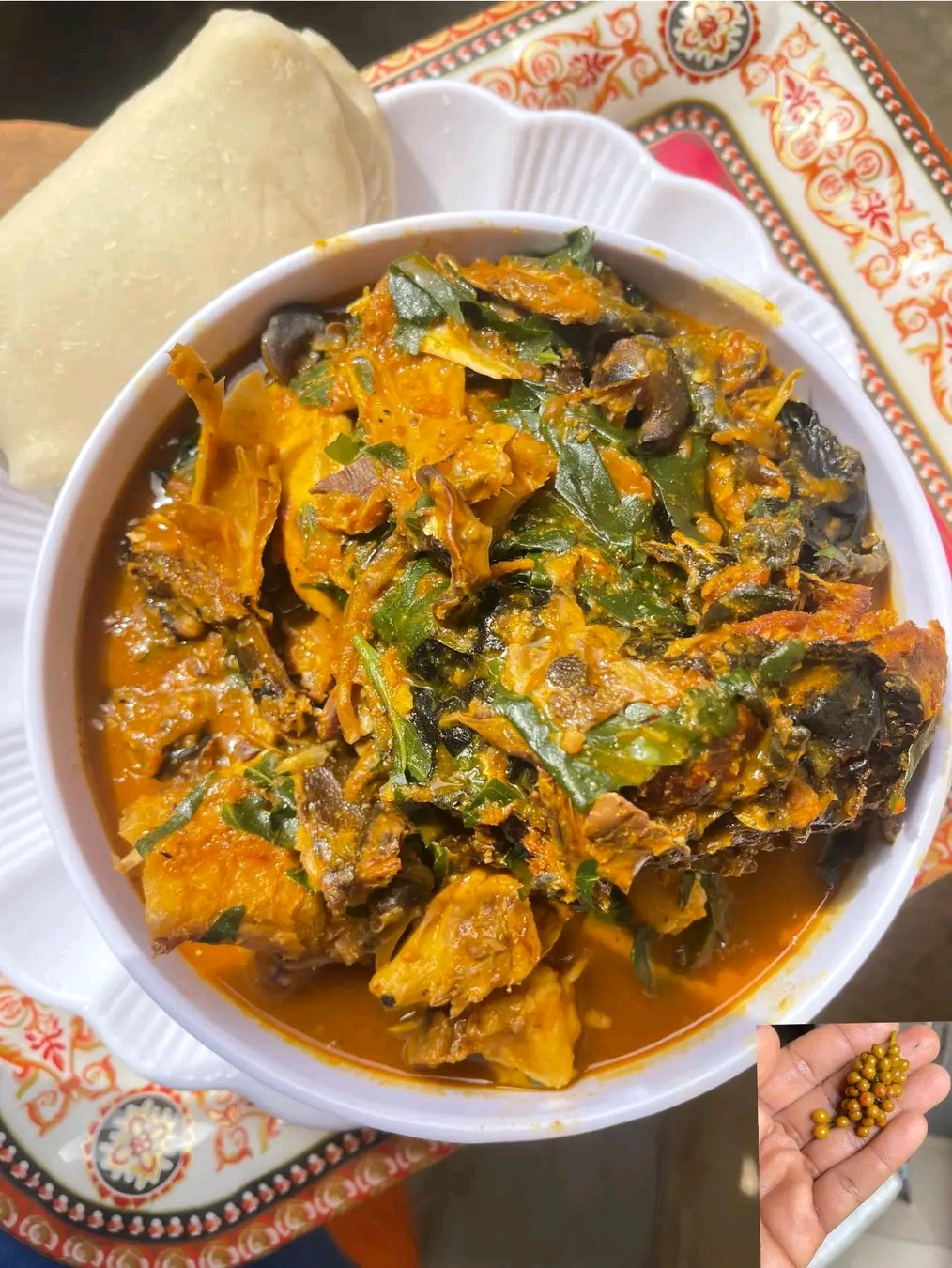
Your aromatic, richly colored Uziza soup made with palm fruit extract and ogiri is now ready! The combination of the savory palm base, the deep umami of the ogiri, and the spicy uziza is simply divine. Serve it hot with your favorite Nigerian swallow—fufu, pounded yam, eba (garri), or semovita.
Check how to prepare your original ogiri okpei from my post.